Jade plant care
A long-lived succulent that stores water in its leaves, stems and roots. It wants plenty of sun, and can live for decades as a small indoor tree.
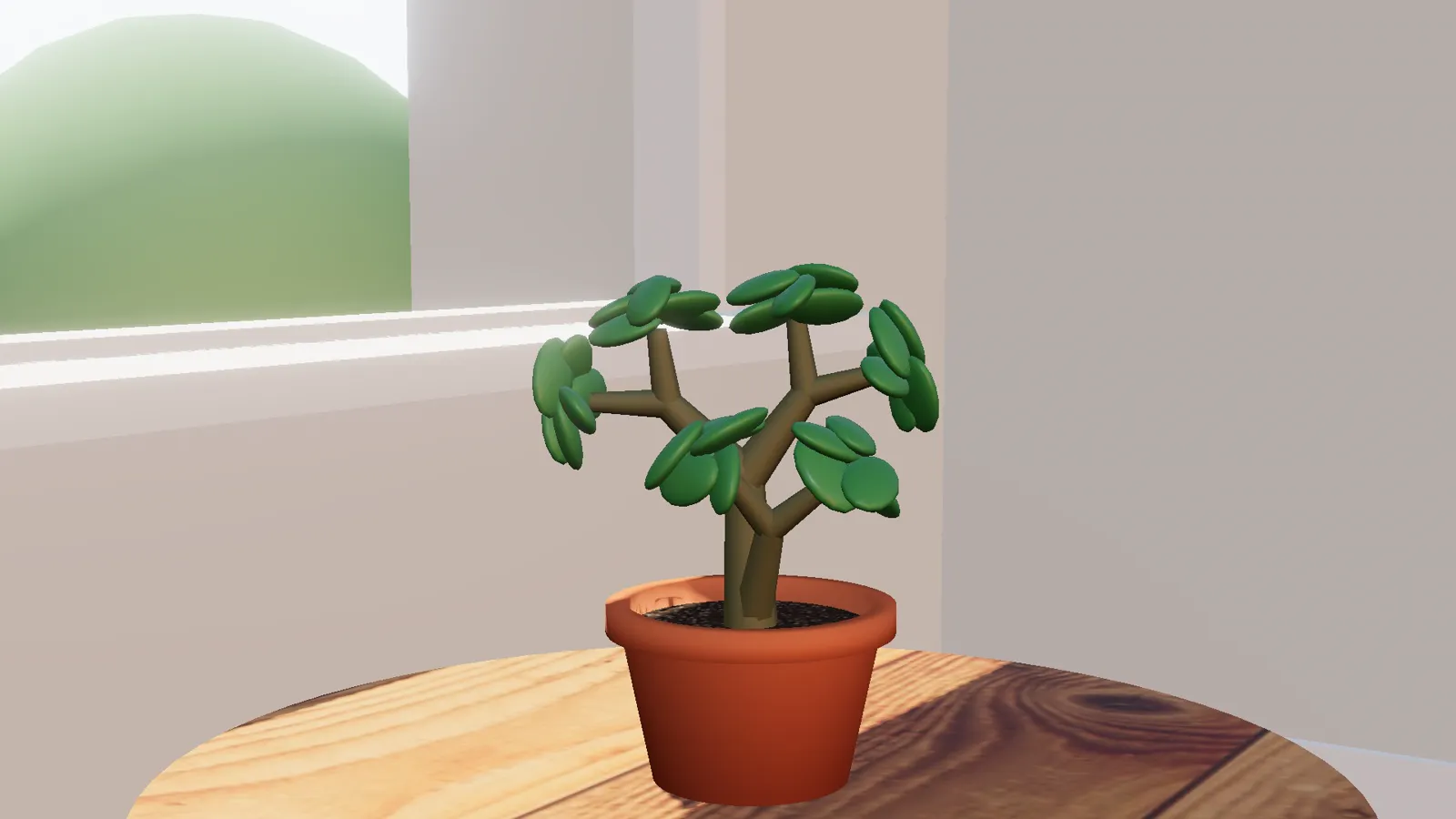
What matters most
Quick facts
| Botanical name | Crassula ovata[1] |
|---|---|
| Light | Grows best in: bright direct light. Grows in: bright direct light, bright indirect light. Does best with four or more hours of direct sun and survives in bright indirect light.[1] |
| Watering | Deeply, then not again until the soil has dried.[1] |
| Cats and dogs | Toxic[3] |
| Humidity | No need for high humidity or misting. It adapts to average indoor air.[4] |
| Temperature | Days of 65 to 75°F (18 to 24°C), cooler nights of 50 to 55°F (10 to 13°C). In winter, keep its leaves off cold windowpanes.[2] |
| Potting mix | A fast-draining cactus or succulent mix. Add extra perlite or sharp sand to standard potting mix.[1] |
| Feeding | Sources range from every two months to every three or four months during growth. None in fall and winter.[1][2][4] |
Check your own plant. Both tools open with this plant already picked.
What makes jade plant different
- Red edges mean enough sun. The fleshy green leaves should be edged or tinged red in good light.[1] Deep green leaves on drooping stems mean the plant is fine but short of light.[1]
- Flowers after long nights. Clusters of small white or pink star-shaped flowers form in response to long nights.[1] Mature plants can bloom in winter,[2] though NC State says jade does not usually bloom in homes.[5]
- Dots that are not disease. Tiny white or black dots on the leaves are hydathodes, healthy pores that move water.[6]
- A very long life. Jade can live up to 100 years.[6]
- Gentle with sprays. The succulent leaves can be damaged by insecticides,[1] and Clemson Extension advises against insecticidal soap on jade.[2]
- Lower leaves drop with age. Losing a few lower leaves slowly is natural; leaves burned by sun, sprays or frost also fall, and new ones sprout.[1]
Common jade plant problems
- Stem and root rot, with leaf drop: overwatering, or a mix that drains slowly.[1][2]
- Mealybugs: the most common pest. Wipe them off with a cotton swab dipped in rubbing alcohol, again and again over several days or weeks.[1][2]
- Spider mites: the plant loses its green color and looks dusty or speckled.[2]
- Leggy growth: too little light. Light that is too intense can scorch the leaves.[4]
Repotting and propagation
Repot every two to three years, or when the plant gets top-heavy and might tip, as new growth starts.[1] Move an older, top-heavy plant into a large, heavy pot, and wait four months before feeding it.[2]
Take cuttings. Jade is especially easy to grow from stem or leaf cuttings. Let them dry for a few days so the cut heals over, then insert them in fairly dry, well-drained mix. They root most easily in summer.[1]
Common questions
Why are my jade plant's leaves not red at the edges?
Not enough light. Jade leaves should be edged or tinged with red in enough sun; in too little, they turn plain or light green.
How do I get a jade plant to flower?
Wisconsin Extension suggests several weeks of cool, dry, dark treatment in fall: little water, around 55°F, and no extra light in the evening. Other sources say jade rarely flowers indoors.
What are the tiny dots on jade leaves?
Tiny white or black dots are hydathodes, healthy pores that move water. They are not a disease.
Is jade plant safe for cats and dogs?
No. The ASPCA lists jade plant as toxic to cats and dogs.
Sources
Each numbered link on this card points to one of these pages, each opened and read on the date shown. How we check facts.
- Jade Plant, Crassula ovataUniversity of Wisconsin-Madison Extension. Checked .
- Jade PlantClemson Cooperative Extension, Home & Garden Information Center. Checked .
- Jade PlantASPCA. Checked .
- Care tips for light-loving houseplants (RHS Urban Show 2024)Royal Horticultural Society. Checked .
- Crassula ovata | North Carolina Extension Gardener Plant ToolboxNC State Extension. Checked .
- Jade Plant, A No Fuss HouseplantPenn State Extension. Checked .