How to repot a houseplant
How to tell a plant has outgrown its pot, how big the next pot should be, and how to move it without harming the roots.
Quick answer
Repot in spring, once roots grow out of the drainage holes or circle the root ball. Choose a pot with a drainage hole only 1 to 2 inches wider, fill with fresh soilless potting mix, set the plant at the same depth as before, water it through, and do not feed it for a while.
How do I know a plant needs repotting?
Roots poke out of the drainage holes or circle the root ball, the mix dries out fast, or the plant wilts between normal waterings.
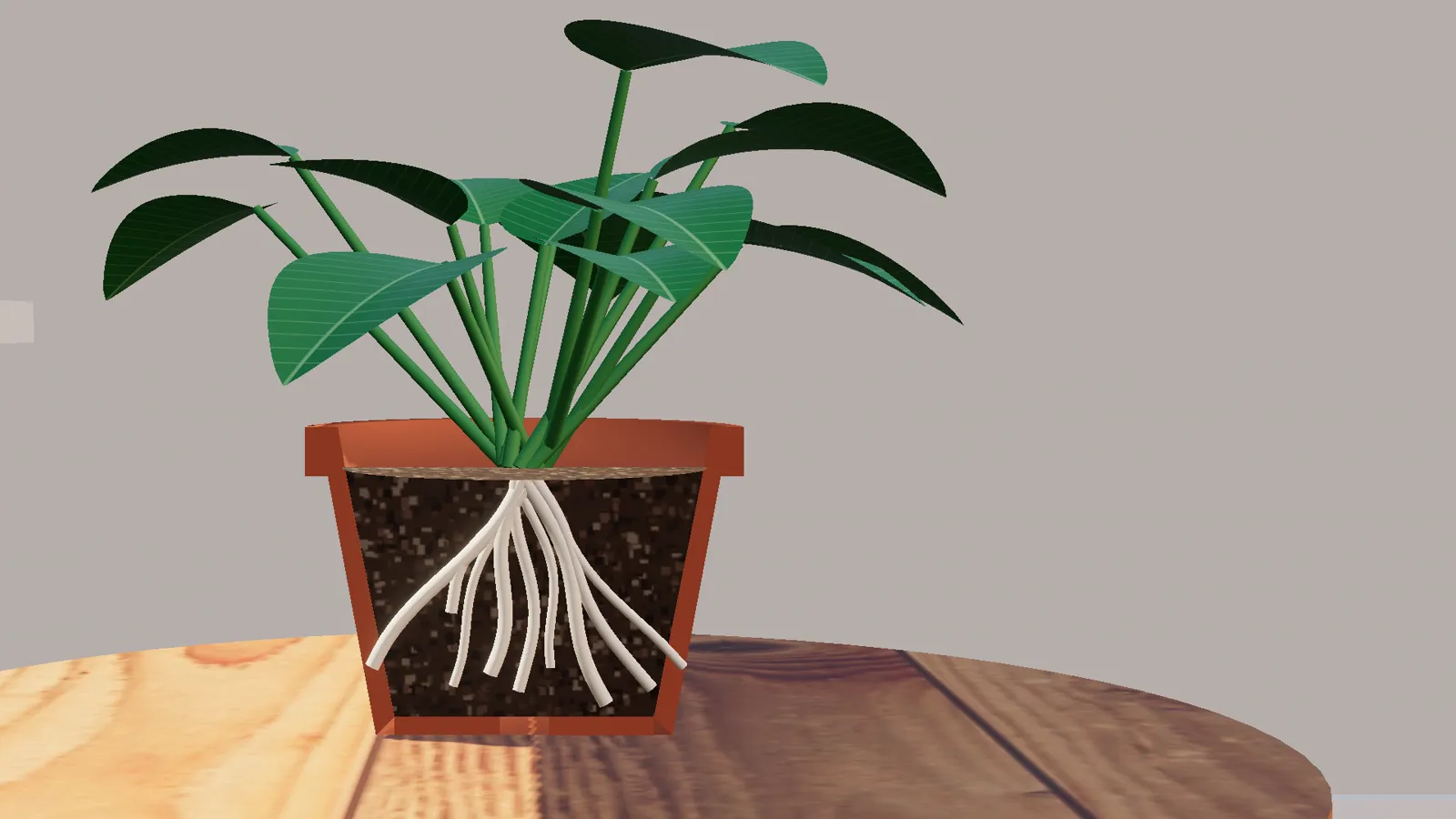
- Roots grow through the drainage holes, or the plant is pot-bound.[1]
- The potting mix dries out very quickly, even in cool weather.[1]
- Roots show on the soil surface, new leaves come out smaller than usual, or the plant wilts between normal waterings.[2]
- Water runs straight through without soaking in, leaving the middle of the root ball dry.[3]
- Algae on the surface can mean the mix has gone sour.[4]
To be sure, slide the plant out. If roots circle the root ball, or you can hardly see any mix in its bottom third, it is time.[1] If no roots show on the outside of the root ball, it does not need a bigger pot yet.[5]
When is the best time to repot?
In spring, as the plant starts its new growth. Avoid fall and winter, and leave sick, dormant or flowering plants alone for now.
Spring, when the plant naturally begins its seasonal growth, is the best time.[1] In autumn and winter growth slows or stops, so fresh mix is more likely to sit too wet.[6] Do not repot plants that are ailing, dormant or beginning to flower.[7] How often depends on the plant: fast growers may need it every year, slow growers every two to three years.[7]
What size pot should I use?
One 1 to 2 inches wider than the old pot, with a drainage hole. A much bigger pot stays wet and can rot the roots.
Pick a pot 1 or 2 inches (2.5 to 5 cm) larger in diameter,[7] or one size up; very vigorous plants may need two sizes.[8] A pot that is too large holds wet soil for too long and can lead to root rot,[5] because the roots rot instead of growing into the new mix.[9] A drainage hole is essential so excess water can escape.[1]
| Your situation | What to do |
|---|---|
| Roots are crowded and the plant can grow bigger | Move it to a pot 1 to 2 inches wider.[7] |
| You want it to stay the same size | Trim off the outer roots, return it to its pot with some fresh mix, and cut back some top growth.[1] Removing up to 15% of the roots every few years is enough.[6] |
| Too big to lift out | Top-dress: replace the top 2 to 3 inches of mix every other year or so.[7] |
| The pot has no drainage hole | Repot into a pot with a hole, and use the decorative pot as an outer holder.[1] |
| It was moved into a pot that is far too big and now wilts and yellows | Move it down into a pot only just larger than its root ball, and water less, not more.[9] |
Clay pots draw water and salts out of the mix, so plants in clay need watering more often than in plastic.[1] Terracotta vs plastic pots compares the two.
What potting mix should I use?
A good soilless potting mix made for containers. Never garden soil, and skip dense products labeled "potting soil", which hold too little air.
Garden soil in an indoor pot can bring disease and pests; use a soilless potting mix made for container plants instead.[1] Maryland Extension warns that products sold as "potting soil" are usually too dense for good aeration.[10] Orchids, bromeliads and anthuriums grow on trees in nature, and their roots may rot in ordinary potting mix.[10] Moisten the mix before you start so it takes up water evenly.[1]
How do I repot a houseplant step by step?
Water the plant first, ease it out, loosen circling roots, set it at the old depth in fresh mix, press gently, then water through.
- Water the plant in its old pot and let it rest for an hour.[1]
- Prepare the new pot. Wash a used pot and sanitize it with one part bleach to nine parts water; soak a new unglazed clay pot in water overnight.[1]
- Add mix to the bottom so that the top of the root ball will sit about an inch below the rim.[1]
- Ease the plant out. Do not pull it by the stem, which can tear it from the roots.[11] If it sticks, run a straight knife around the inside of the old pot.[8]
- Check and loosen the roots. Healthy roots are white and firm; cut out any that are black and mushy.[12] Tease circling roots apart, or cut them vertically along the side of the root ball.[8] Maryland Extension scores tight root balls about half an inch deep every 2 to 3 inches.[10]
- Set it at the same depth it grew at before,[2] without adding mix above the old soil line.[7]
- Fill around it and press gently with your fingers. Do not pack the mix down.[7]
- Water until it runs out of the drainage holes, so you know it has soaked right through.[6] Then wait until the top of the mix dries before watering again.[10]
Should I put gravel in the bottom of the pot?
No. A layer of gravel or pot shards does not improve drainage; it makes water collect in the mix above it, closer to the roots.
This is one of the most repeated tips, and extension sources reject it. Water does not drain straight into the gravel; it "perches" in the mix above it.[13] A layer of rocks or clay pieces actually slows water moving through the pot.[7] NC State says never to put gravel or rocks under the potting mix to improve drainage.[8] Use a pot with a drainage hole and a good mix instead.
How do I care for a plant after repotting?
Keep it out of strong light for a few days, water when the top of the mix dries, and do not feed it straight away.
Newly repotted plants should not be fertilized,[14] and good potting mixes often include slow-release fertilizer that lasts several months.[10] Montana State Extension suggests indirect light for a few days and at least two weeks before any feed, and notes that some yellowing or leaf drop afterward is normal.[15] Use the Watering Helper to set a routine for the new pot size and material. If the roots you saw were brown and soft, read root rot next.
Print the one-page houseplant care cheat sheet
Common questions
Should I cover the drainage hole before adding mix?
Sources differ. Some suggest a piece of screen or a pot shard to keep mix in, while Kentucky's Master Gardener manual says it is not necessary. Never block the hole with a layer of gravel.
How often should I repot a houseplant?
Only when it needs it. Clemson Extension says fast growers may need a new pot every year and slow growers every two to three years.
Can I reuse old potting mix?
NC State says used mix can be reused as long as the plant had no soil-borne disease. After root rot, Wisconsin Extension says never reuse the mix.
Why are leaves yellowing after I repotted my plant?
Some yellowing or leaf drop is normal after repotting. Keep the plant out of strong light for a few days while the roots recover, and do not water again until the top of the mix is dry.
Can I repot in winter?
Better not, unless the plant is in trouble. Growth slows in fall and winter, so fresh mix risks sitting too wet. Spring, as active growth starts, is the usual time.
Sources
Each numbered link in the text points to one of these pages, each opened and read on the date shown. How we check facts.
- Repotting HouseplantsPenn State Extension. Checked .
- Repotting (Houseplants)University of Illinois Extension. Checked .
- Pot-Bound Indoor PlantsUniversity of Maryland Extension. Checked .
- How to grow houseplantsRoyal Horticultural Society. Checked .
- Repotting Houseplants Good Winter ActivityPurdue University Consumer Horticulture. Checked .
- How to repot a plantRoyal Horticultural Society. Checked .
- Indoor Plants: Transplanting & RepottingClemson Cooperative Extension, Home & Garden Information Center. Checked .
- Extension Gardener Handbook, Chapter 18: Plants Grown in ContainersNC State Extension. Checked .
- OverpottingRoyal Horticultural Society. Checked .
- Potting and Repotting Indoor PlantsUniversity of Maryland Extension. Checked .
- How to Repot a HouseplantN.C. Cooperative Extension, Wayne County Center. Checked .
- Houseplants: Repotting (PlantTalk Colorado 1316)Colorado State University Extension. Checked .
- Container Drainage OptionsUniversity of Illinois Extension. Checked .
- Success With Houseplants: FertilizationNebraska Extension in Lancaster County. Checked .
- Ask Steward: How do I repot a houseplantMontana State University Extension. Checked .