ZZ plant care
A slow, tough plant that stores water underground. It asks for very little, and too much water is the main thing that harms it.
What matters most
Quick facts
| Botanical name | Zamioculcas zamiifolia[1] |
|---|---|
| Light | Grows best in: bright indirect light. Grows in: bright indirect light, medium light, low light. Survives low light, but bright indirect light speeds up its very slow growth.[1][4] |
| Watering | Once or twice a month, after the mix dries out fully.[1] |
| Cats and dogs | Toxic Not on the ASPCA plant list, but an ASPCA article names it as toxic: chewing releases needle-like crystals that irritate the mouth.[5] |
| Humidity | Normal indoor humidity is fine. It is adapted to arid conditions.[1] |
| Temperature | Clemson Extension says keep it above 60°F (16°C); UConn gives 55 to 80°F (13 to 27°C). It is sensitive to cold.[1][2] |
| Potting mix | Coarse and well-draining: half peat- or coir-based potting soil, a quarter perlite and a quarter sand.[1] |
| Feeding | A balanced fertilizer only once or twice during the growing season.[1][3] |
| Size | Slow growing, in time 2 to 4 feet (60 to 120 cm) tall and wide.[3] |
Check your own plant. Both tools open with this plant already picked.
What makes ZZ plant different
- Water stored underground. Its bulbous rhizomes store water, which is why it shrugs off drought.[1][3]
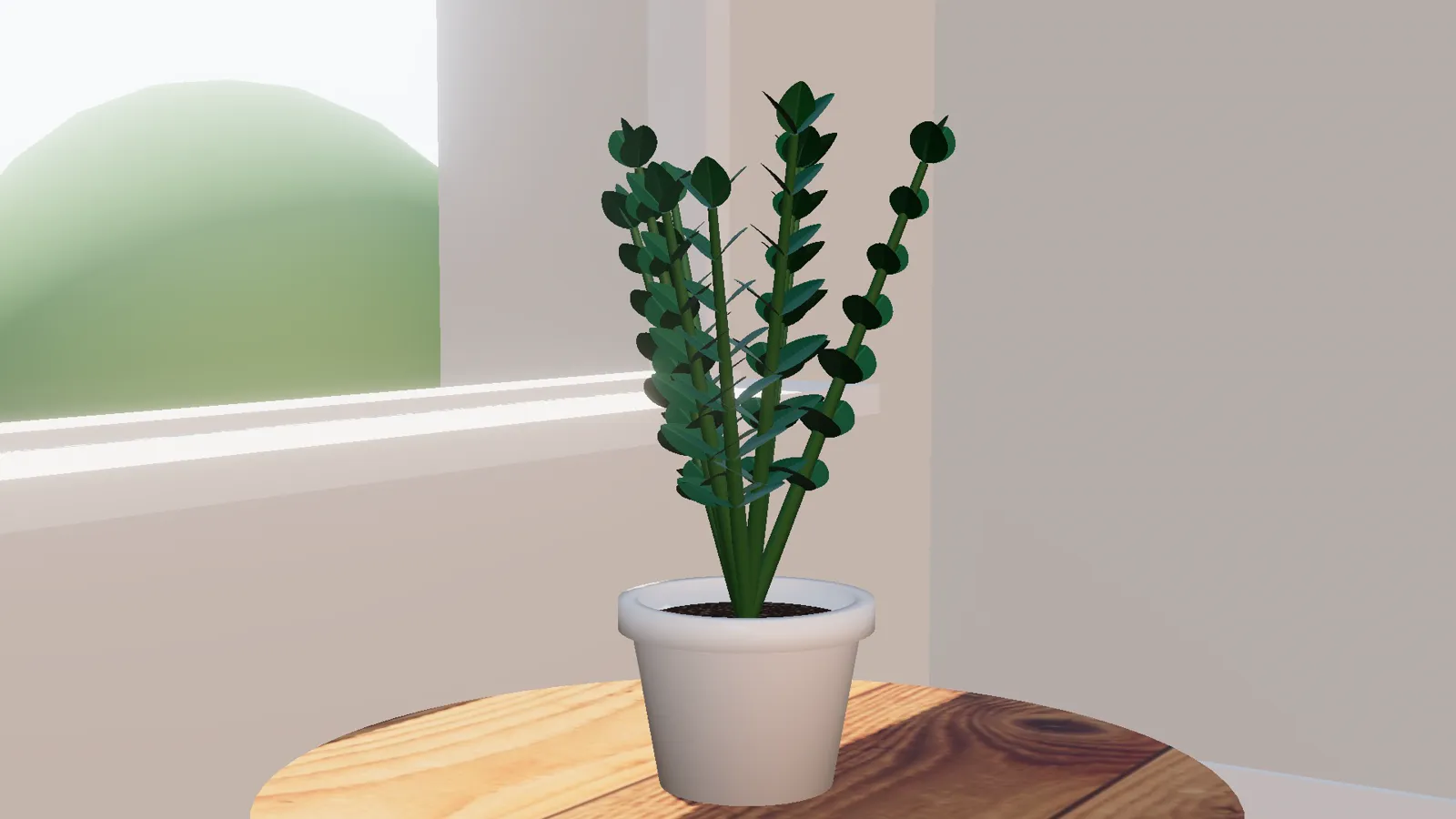
- Each "stem" is really one leaf. The glossy upright leaves are compound, usually with 6 to 8 pairs of leaflets along a central axis, and each rises from the underground rhizome.[4][3]
- Black spots on the stems are normal.[1]
- It may lean away from the light. The stems can bend away from light, the opposite of how most plants behave.[2]
- It can crack its pot. Left in the same pot too long, it can push out and crack the sides.[2]
- Dark and dwarf kinds. 'Raven' has new leaves that start green and mature to almost black; 'Zenzi' is a dwarf that stays 10 to 12 inches (25 to 30 cm) tall. ZZ plants rarely flower.[1]
Common ZZ plant problems
- Yellow leaves and rotting rhizomes: the signs of overwatering.[2][1]
- Whitened, scalded leaves: too much direct light, which can also make the leaves curl.[2]
- Scale insects: otherwise there are no significant pest problems.[3]
Propagation
Propagate by division or by leaf cuttings.[3] For a cutting, remove whole leaves from a stem and leave them out for a few hours so the cut end calluses over. Then push the stem part way into moist, soilless potting mix. Indoors, a new rhizome can take up to 9 months to start forming.[2]
Common questions
Why are my ZZ plant leaves turning yellow?
Usually too much water. Yellow leaves and rotting rhizomes are the signs of overwatering. Let the mix dry out completely before you water again.
Are black spots on ZZ plant stems a problem?
No. Clemson Extension notes that black spots on the stems are normal.
How long do ZZ leaf cuttings take to root?
Be patient. Indoors it can take up to 9 months before a new rhizome starts to form.
Is a ZZ plant toxic to pets?
Yes. It is not on the ASPCA plant list, but an ASPCA article names it as toxic: chewing it irritates the mouth.
Sources
Each numbered link on this card points to one of these pages, each opened and read on the date shown. How we check facts.
- ZZ Plant (Zamioculcas zamiifolia): Indoor Care, Growing Tips & Plant GuideClemson Cooperative Extension, Home & Garden Information Center. Checked .
- ZZ PlantUConn Home and Garden Education Center. Checked .
- Zamioculcas zamiifolia | North Carolina Extension Gardener Plant ToolboxNC State Extension. Checked .
- Easy Low-Maintenance HouseplantsIowa State University Extension and Outreach. Checked .
- These Houseplants Can Cause Trouble for Your PetsASPCA. Checked .