Echeveria care
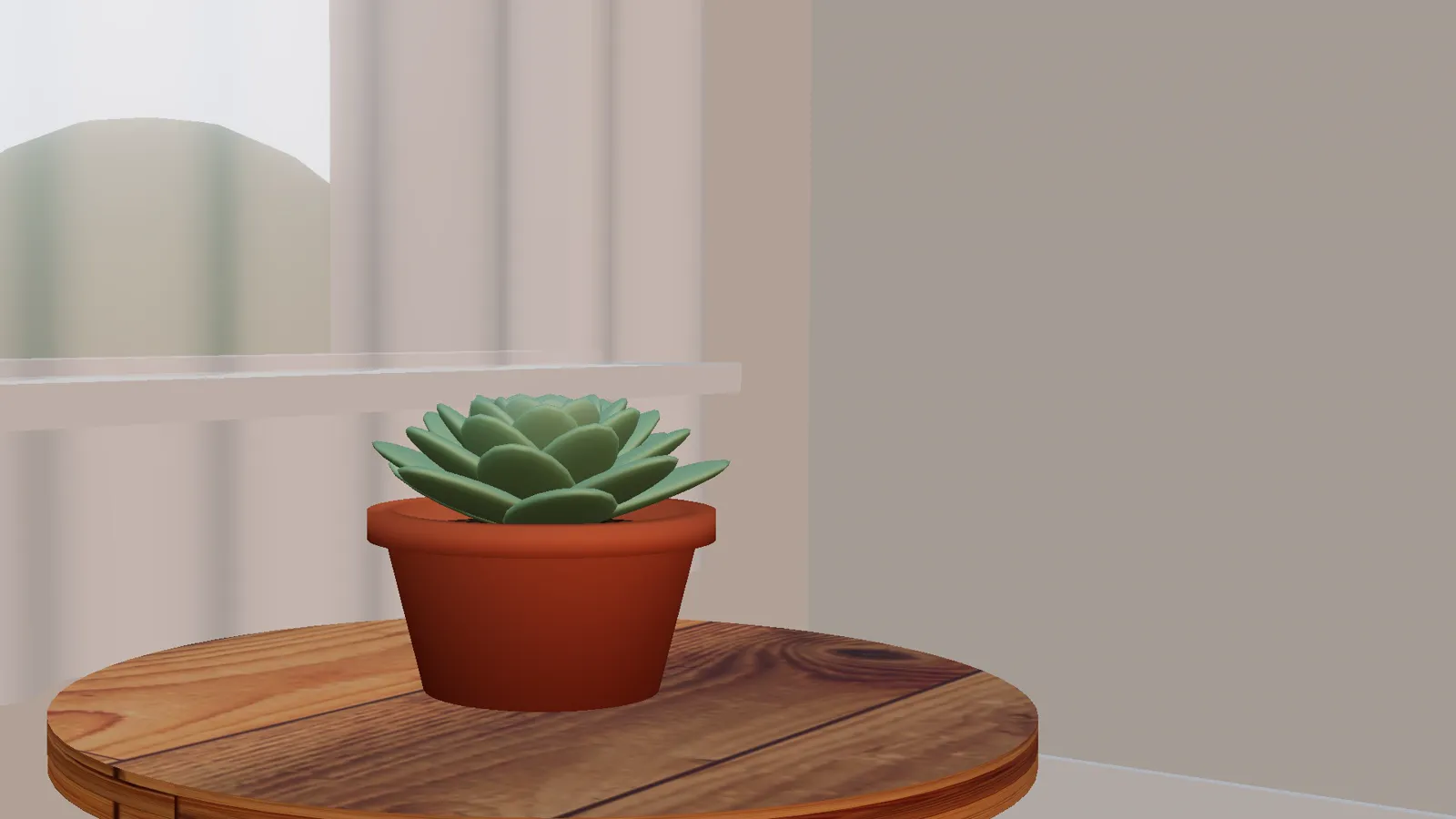
A small rosette succulent in blue, pink or green. It needs lots of light and little water, and grows new plants from its offsets and even single leaves.
What matters most
Quick facts
| Botanical name | Echeveria species[1] |
|---|---|
| Light | Grows best in: bright indirect light. Grows in: bright indirect light. Indoors, succulents need many hours of bright, indirect light. In low light they turn lanky and pale.[1][2] |
| Watering | A light watering once the mix is nearly dry; never leave it in water.[1] |
| Cats and dogs | Non-toxic ASPCA lists blue echeveria (Echeveria glauca) as non-toxic.[4][5] |
| Humidity | The low humidity of most homes suits it.[2] |
| Temperature | Keep it above 50°F (10°C). Iowa State gives 55 to 75°F (13 to 24°C) as the preferred range for succulents.[1][2] |
| Potting mix | Gritty, sharply draining cactus mix, in a pot with plenty of drainage holes.[1] |
| Feeding | Spring and summer only, at half to a quarter of the label rate. None in winter.[2] |
| Water quality | Rainwater if possible: fluoride in tap water can damage the leaves.[1] |
| Size | Usually 1 to 12 inches (2.5 to 30 cm) tall. Slow growing.[6] |
Check your own plant. Both tools open with this plant already picked.
What makes echeveria different
- Colored rosettes. Echeverias form small rosettes of succulent leaves in glaucous blue, grayish pink or shades of green, depending on the species.[1] Some have a powdery, waxy bloom on the leaf surface.[6]
- Flattening means it wants light. In low light, rosettes often open up and their leaves flatten out to collect more light.[3]
- A cool, dry winter keeps it compact. Kept too warm or watered too often in winter, it makes weak, spindly growth.[1]
- Clumps from offsets. Mature plants make little plantlets, or offsets, that build up an ever-expanding clump.[1]
- Summer flowers. In summer it sends up stalks of small bell-shaped flowers, usually yellow or pink.[1]
- A stem shows with age. The rosette sits close to the ground at first, but as lower leaves wither and drop, the stem becomes visible.[6]
Common echeveria problems
- Root rot: wet or cold conditions, or water left standing.[1]
- Stretched, pale growth: light levels are too low.[3]
- Sun scald: mostly when a plant kept in low light is suddenly moved into bright or direct sun.[3]
- Mealybugs: cottony masses where leaves join the stem.[3]
- Shriveling and slow, misshapen growth: underwatering, which is as much a problem for succulents as overwatering.[7]
Repotting and propagation
Repot in spring, and not into too large a pot: the extra mix stays too wet and can cause rot.[7]
Offsets can be detached and set in very well-drained mix, where they root. For leaf cuttings, remove a leaf and leave it on the soil; a small rosette forms and the old leaf withers.[6] The RHS lets succulent leaf cuttings callus for a day or two, sets them in two parts cactus mix to one part fine grit, and keeps the mix just slightly moist in a warm, bright spot.[8] A stretched plant can be beheaded: cut off the rosette with an inch or two of stem, let it callus, then root it like a cutting.[9][6]
Common questions
Why is my echeveria stretching and turning pale?
Not enough light. Tall, pale, spindly new growth and rosettes that open up and flatten out are trying to catch more light. Move it somewhere brighter, but gradually.
Can I grow echeveria from a single leaf?
Yes. Remove a whole leaf, let it callus for a day or two, then set it on gritty cactus mix. A small rosette forms and the old leaf withers away.
Is it normal for the bottom leaves to dry up?
Yes, a dried-up lower leaf or two is nothing to worry about on a healthy rosette. Remove them, since dead leaves can harbor disease.
Is echeveria safe for cats and dogs?
The ASPCA lists blue echeveria (Echeveria glauca) as non-toxic to cats and dogs.
Sources
Each numbered link on this card points to one of these pages, each opened and read on the date shown. How we check facts.
- EcheveriaRoyal Horticultural Society. Checked .
- Growing Succulents IndoorsIowa State University Extension and Outreach. Checked .
- Common Problems and Issues of SucculentsIowa State University Extension and Outreach. Checked .
- Toxic and Non-Toxic Plant List: CatsASPCA. Checked .
- Toxic and Non-Toxic Plant List: DogsASPCA. Checked .
- Echeveria | North Carolina Extension Gardener Plant ToolboxNC State Extension. Checked .
- How to grow cacti and succulentsRoyal Horticultural Society. Checked .
- Leaf cuttingsRoyal Horticultural Society. Checked .
- How to Propagate SucculentsIowa State University Extension and Outreach. Checked .