Rubber plant care
A fig grown for its big, glossy leaves. It adapts to lower light, likes to stay put, and can grow into a small indoor tree.
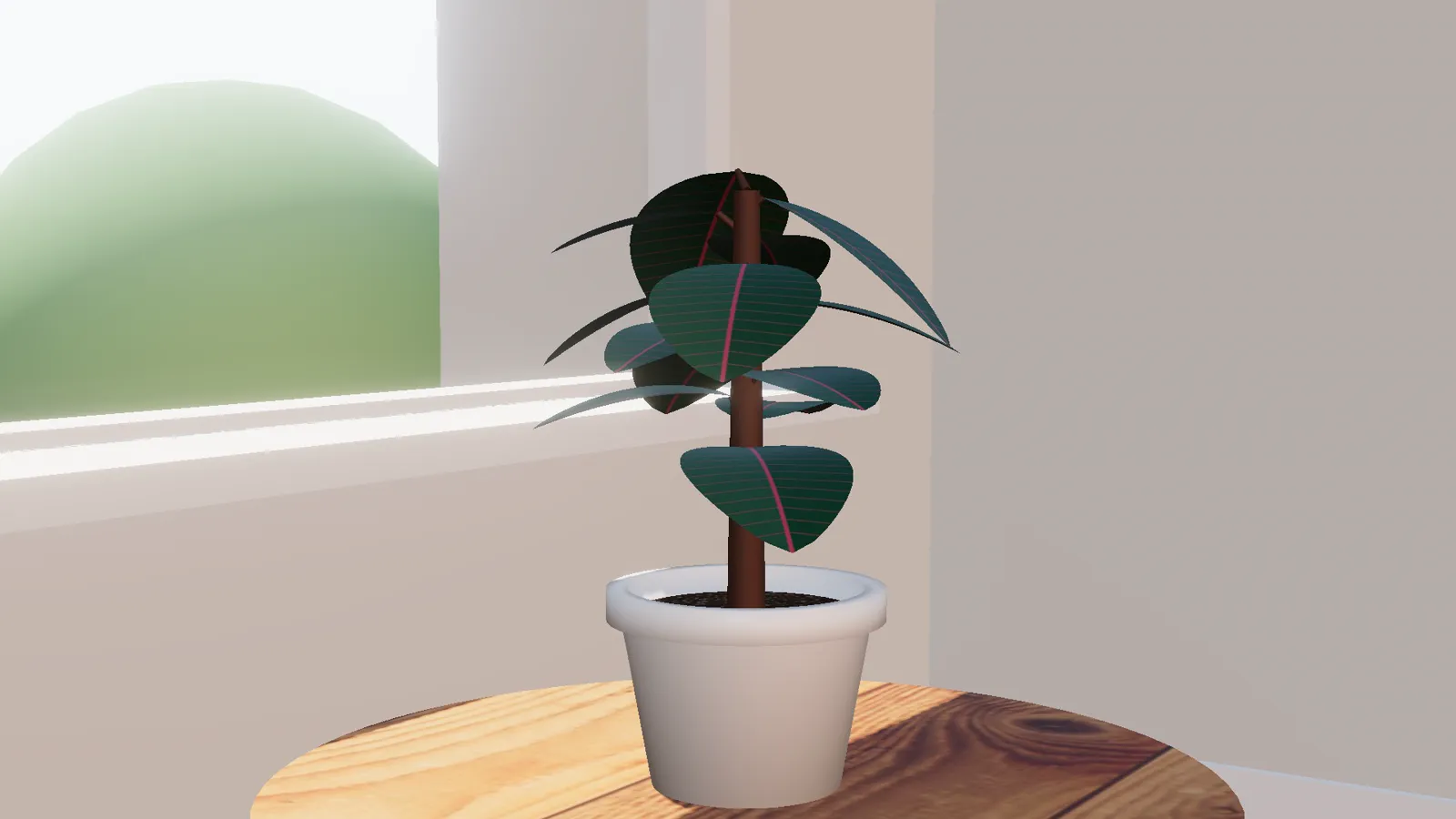
What matters most
- Water thoroughly, then let the soil dry slightly to the touch. Empty the saucer after watering.[1]
- Bright light is best, such as morning light from an east window, but it adapts to low light.[1]
- Find it a good spot and leave it there. It prefers to stay in one place and does poorly in drafts or cold.[2]
Quick facts
| Botanical name | Ficus elastica[1] |
|---|---|
| Light | Grows best in: bright indirect light. Grows in: bright indirect light, medium light, low light. Likes bright light such as morning light from an east window, and adapts to low light.[1] |
| Watering | Water well, then wait until the soil feels slightly dry.[1] |
| Cats and dogs | Not on the ASPCA list. Keep it away from pets and ask your vet if one chews it. |
| Humidity | Prefers humid conditions, but tolerates the dry air common in homes.[1] |
| Temperature | 75 to 80°F (24 to 27°C) by day and 60 to 65°F (16 to 18°C) at night. Avoid anything below 55°F (13°C), sudden drops and cold drafts.[1] |
| Potting mix | A well-drained houseplant mix, in a pot with drainage holes.[1] |
| Feeding | Every two weeks in spring and summer with a water-soluble houseplant fertilizer; less often in lower light.[1] |
| Size | Easily 6 to 10 feet (1.8 to 3 m) or more indoors, but it can be pruned smaller.[1] |
Check your own plant. Both tools open with this plant already picked.
What makes rubber plant different
- The sap gave it its name. The species name refers to the milky sap that was once used to make rubber. Cut leaves drip sap.[2] The sap may irritate skin, or the stomach if eaten.[1]
- Colored stipules. Its foot-long, shiny leaves come with pink or purple stipules.[2]
- You choose the shape. Prune the main branches for a bushier plant, or leave them for a tall, narrow, tree-like form.[2]
- It gets lanky indoors. Support a tall plant with a stake, or prune it in spring to rejuvenate it.[1]
- Dusty leaves need a wash. Wash the leaves with water when they get dusty, which also helps the plant stay healthy.[1]
- A giant in the wild. In the wild, the tree can reach 100 feet (30 m).[2]
Common rubber plant problems
- Leaf drop: from overwatering, temperature drops or cold drafts,[2] or too little light and dry air.[1] A few bottom leaves yellowing and dropping is normal.[2]
- Yellow leaves: the soil stays too wet.[1]
- Root rot: from a mix that drains slowly or watering too often.[1]
- Pests: mealybugs, scale and spider mites.[2]
Repotting and propagation
Repot in late winter or early spring if needed. New plants can be started from stem or tip cuttings, or by air layering.[1]
Air layering, as Iowa State Extension describes it:[3]
- Pick a point on a stem 12 to 18 inches (30 to 45 cm) from a shoot tip and remove the leaves right around it.[3]
- Cut all the way around the stem, down to the woody center. Make a second ring cut 1 inch (2.5 cm) below, join the two with a third cut, and remove the ring of bark. Scrape the exposed surface clean.[3]
- Dust on a little rooting hormone if you have it (the stem roots without it, just more slowly), then pack 1 or 2 handfuls of moist sphagnum moss around the cut.[3]
- Wrap the moss in clear plastic and tie it above and below. Roots should appear in several weeks.[3]
- Once there is a good root system, cut the stem just below the bottom tie, unwrap it and pot it in well-drained potting soil.[3]
Common questions
Why is my rubber plant dropping leaves?
Overwatering, temperature drops, cold drafts, too little light and dry air can all cause leaf loss. It is normal for a few bottom leaves to yellow and fall.
How do I make a rubber plant bushier?
Prune the main branches. Left unpruned, it grows tall and narrow, more like a tree.
Is the white sap dangerous?
The sticky white sap may irritate skin, or the stomach if eaten. Keep the plant away from pets and young children who chew plants.
Is rubber plant safe for cats and dogs?
Rubber plant (Ficus elastica) is not on the ASPCA list. Keep it away from pets and ask your vet if one chews it.
Sources
Each numbered link on this card points to one of these pages, each opened and read on the date shown. How we check facts.
- Rubber PlantClemson Cooperative Extension, Home & Garden Information Center. Checked .
- Ficus elastica | North Carolina Extension Gardener Plant ToolboxNC State Extension. Checked .
- How can I propagate a rubber tree?Iowa State University Extension and Outreach. Checked .