Spider plant care
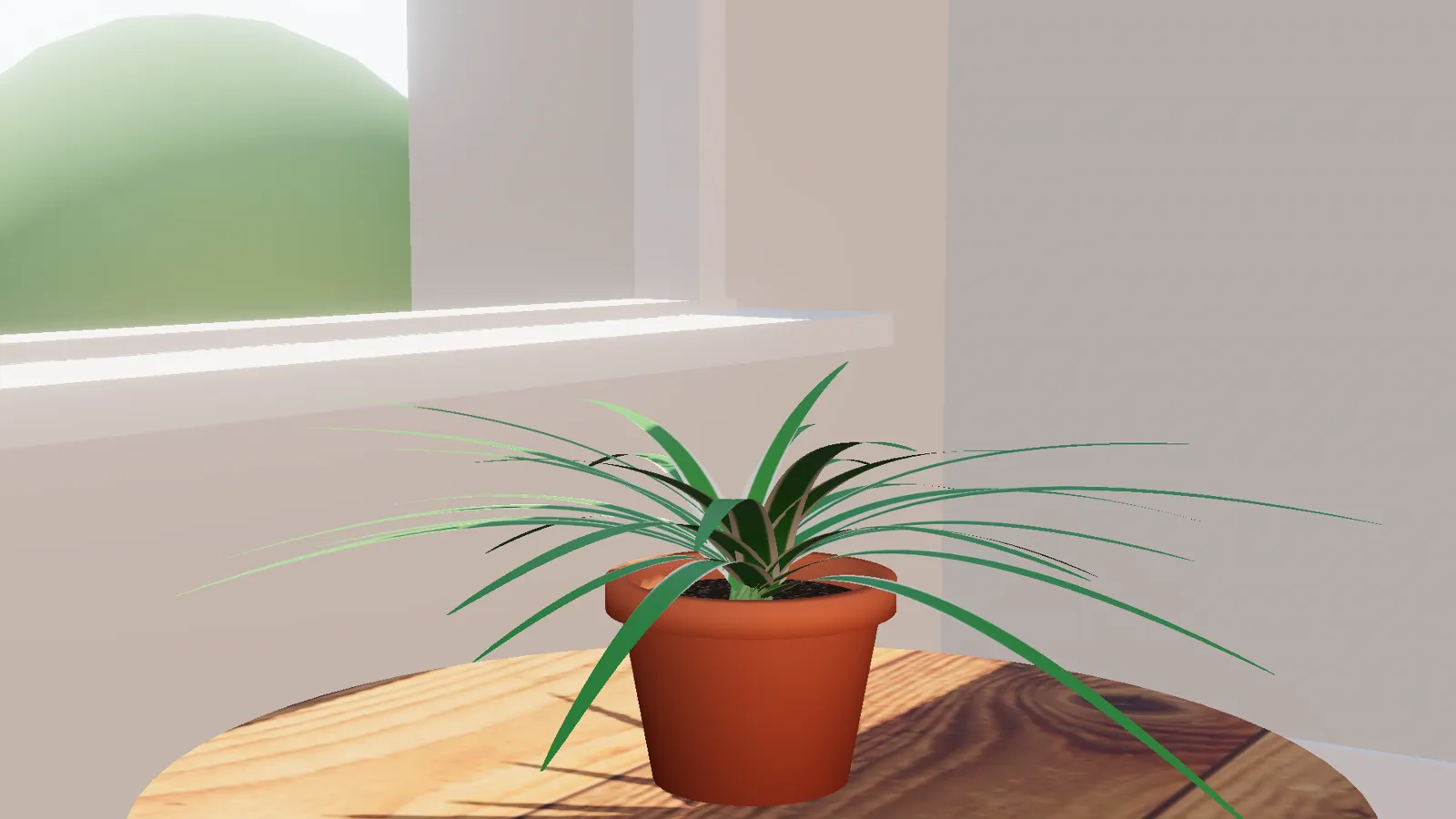
A fast, forgiving plant that sends out runners of baby plants. It is also one of the few common houseplants the ASPCA lists as non-toxic to pets.
What matters most
Quick facts
| Botanical name | Chlorophytum comosum[4] |
|---|---|
| Light | Grows best in: bright indirect light. Grows in: bright indirect light, medium light. Takes some direct sun, but avoid midday sun.[4][5] |
| Watering | Let the soil dry a little between waterings.[4] |
| Cats and dogs | Non-toxic[6][7] |
| Humidity | Does not generally need high humidity, but very dry air can brown the leaf tips.[2] |
| Temperature | 65 to 75°F (18 to 24°C) by day and 50 to 55°F (10 to 13°C) at night. Keep it above 45°F (7°C).[4][3] |
| Potting mix | A general-purpose potting soil with good drainage.[4] |
| Feeding | During active growth, with a water-soluble or slow-release houseplant fertilizer. Too much cuts down the number of plantlets.[4][3] |
Check your own plant. Both tools open with this plant already picked.
What makes spider plant different
- Babies on runners. Healthy plants send out long, wiry stems with small white flowers and miniature plantlets. Detach them for new plants, or leave them on for a very full basket.[4]
- Babies need long nights. Runners and plantlets form when the plant gets short days and long, uninterrupted nights, under 12 hours of light a day for at least three weeks.[3] That is why most appear as days shorten in fall.[4]
- Not before age one. Most spider plants do not flower or make plantlets until they are at least a year old.[2] They make the most when slightly pot-bound.[1]
- Water-storing roots. Thick, fleshy roots store water, which lets spider plants survive uneven watering.[1][4]
- Pale, dull leaves mean thirst. They revive quickly after a thorough drink.[2] Yellowing leaves, on the other hand, usually point to a lack of light rather than of nutrients.[2]
- A hard reset works. A neglected plant with bent, split, browning leaves can be cut down to 2 to 3 inches (5 to 8 cm) to renovate it.[2]
Common spider plant problems
- Brown leaf tips: common on spider plants.[8] Causes include too much fertilizer or water high in salts,[4] fluoride or chlorine in tap water,[3][8] and low humidity or very dry soil.[4] Trimming the brown ends tidies the plant, but new browning will follow unless you fix the cause.[8]
- Root rot: from a mix that drains slowly or too much water.[4][1]
- Pests: few, but scale and mealybugs,[1] spider mites and whiteflies,[4] and aphids on soft new growth.[2]
Repotting and propagation
Repot every year or two into a slightly larger pot, since the fleshy roots fill it quickly.[2] Divide or repot before the roots get big enough to crack the container.[4]
Root the plantlets. Pin a plantlet, still attached, onto a pot of mix with a bent paper clip or wire, and cut it free once it has roots;[1] this can take 2 to 3 weeks.[9] Or detach the plantlets and stand them in a glass of water, then pot them up once the roots lengthen.[2]
Common questions
Why is my spider plant not making babies?
Young plants usually do not make plantlets until they are about a year old. Runners also need short days and long, unbroken nights, and too much fertilizer or too big a pot holds them back.
Why do spider plant leaves get brown tips?
Brown tips are common on spider plants. Fluoride or chlorine in tap water, too much fertilizer, dry air and dry soil can all cause them. Rainwater or distilled water helps.
Why are my spider plant leaves pale and dull?
That usually means it needs water. Spider plants revive quickly after a thorough drink.
Is spider plant safe for cats and dogs?
The ASPCA lists spider plant as non-toxic to cats and dogs.
Sources
Each numbered link on this card points to one of these pages, each opened and read on the date shown. How we check facts.
- Spider plant, Chlorophytum comosumUniversity of Wisconsin-Madison Extension. Checked .
- How to grow spider plantsRoyal Horticultural Society. Checked .
- Chlorophytum comosum | North Carolina Extension Gardener Plant ToolboxNC State Extension. Checked .
- Spider Plant (Chlorophytum comosum)Clemson Cooperative Extension, Home & Garden Information Center. Checked .
- Easy Low-Maintenance HouseplantsIowa State University Extension and Outreach. Checked .
- Toxic and Non-Toxic Plant List: CatsASPCA. Checked .
- Toxic and Non-Toxic Plant List: DogsASPCA. Checked .
- Why does my houseplant have brown leaf tips and edges?Iowa State University Extension and Outreach. Checked .
- Specialized Structures (Houseplants)University of Illinois Extension. Checked .