Houseplant care for beginners
Five needs, three habits and six forgiving plants: everything a beginner needs to keep houseplants alive and growing.
Quick answer
Give a houseplant bright light without hot sun on its leaves, water only when the soil is dry, and use a pot with a drainage hole. Most beginner problems come from watering too often, so check the soil with your finger before you water.
The 5 needs at a glance
| Need | Aim for | Quick check |
|---|---|---|
| Light | Bright light, without hot sun on leaves that cannot take it | Can you see a distinct shadow of your hand? Light Checker |
| Water | Water only when the soil is dry to your plant's depth | Finger in the soil before every watering. Watering Helper |
| Soil and pot | Potting mix in a pot with a drainage hole | Water runs out of the bottom after watering |
| Air | A warm room, away from drafts and heaters | No cold glass, vents or radiators next to the plant |
| Food | Fertilizer in spring and summer only | Follow the label rate; a white crust means too much |
How much light does a houseplant need?
Most houseplants grow best in bright, indirect light: a distinct shadow, but no sun on the leaves. Light drops quickly away from a window.
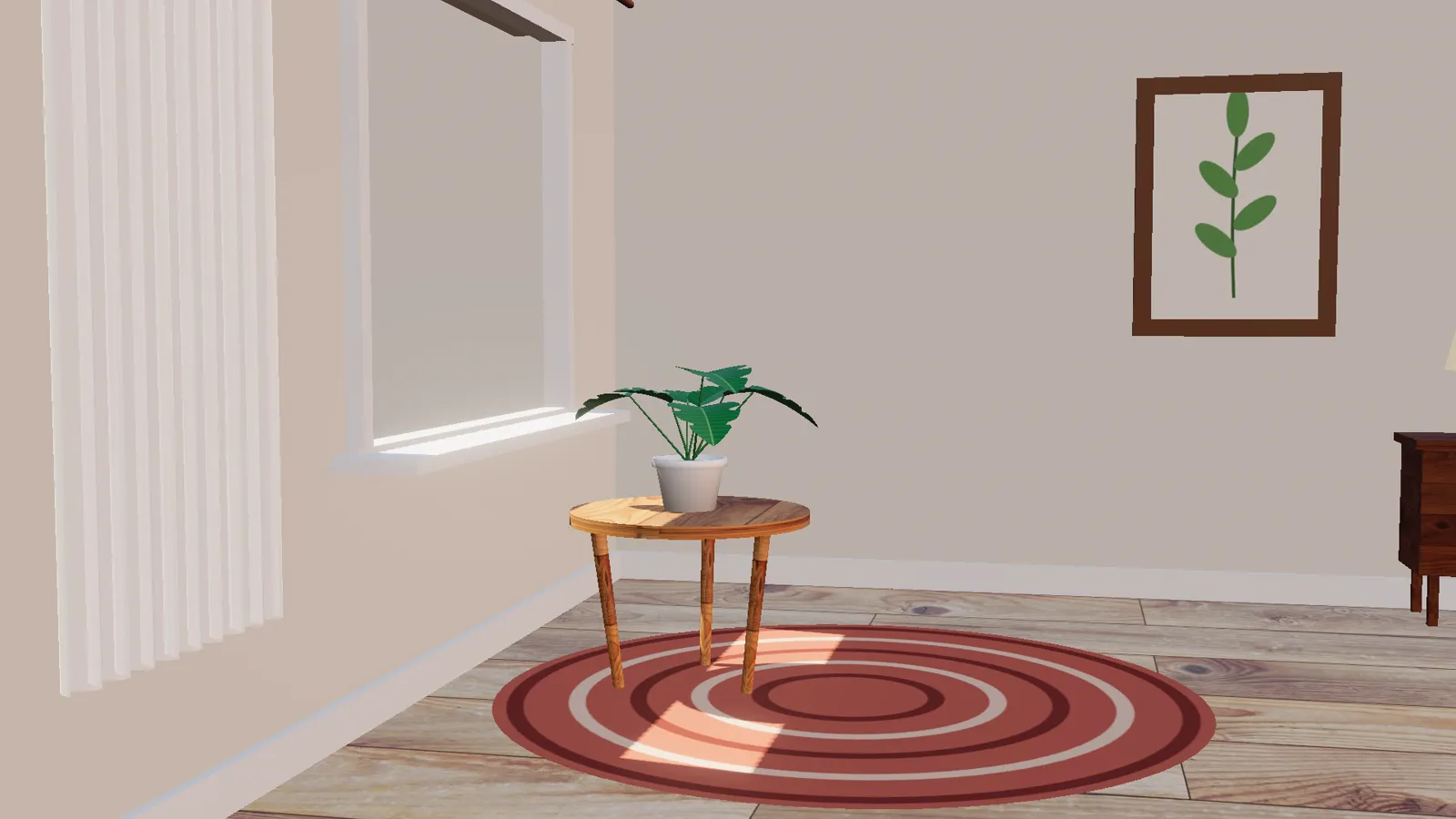
Most houseplants, even those that cope with low light, grow and look their best in bright, indirect light.[1] That is light bright enough to cast a distinct shadow, but with no sun rays hitting the foliage directly.[1] Plants closer to a window get more light than those farther away, and light levels drop quickly with distance.[1][2]
South and east windows often give the most light, west windows give plenty but can be too intense for some plants, and north windows suit plants that tolerate low light.[1] In winter the light is weaker, so move plants closer to the window.[3]
A few plants want sun on their leaves. Cacti and succulents do best in a sunroom or an unshaded south window with several hours of direct sun.[2]
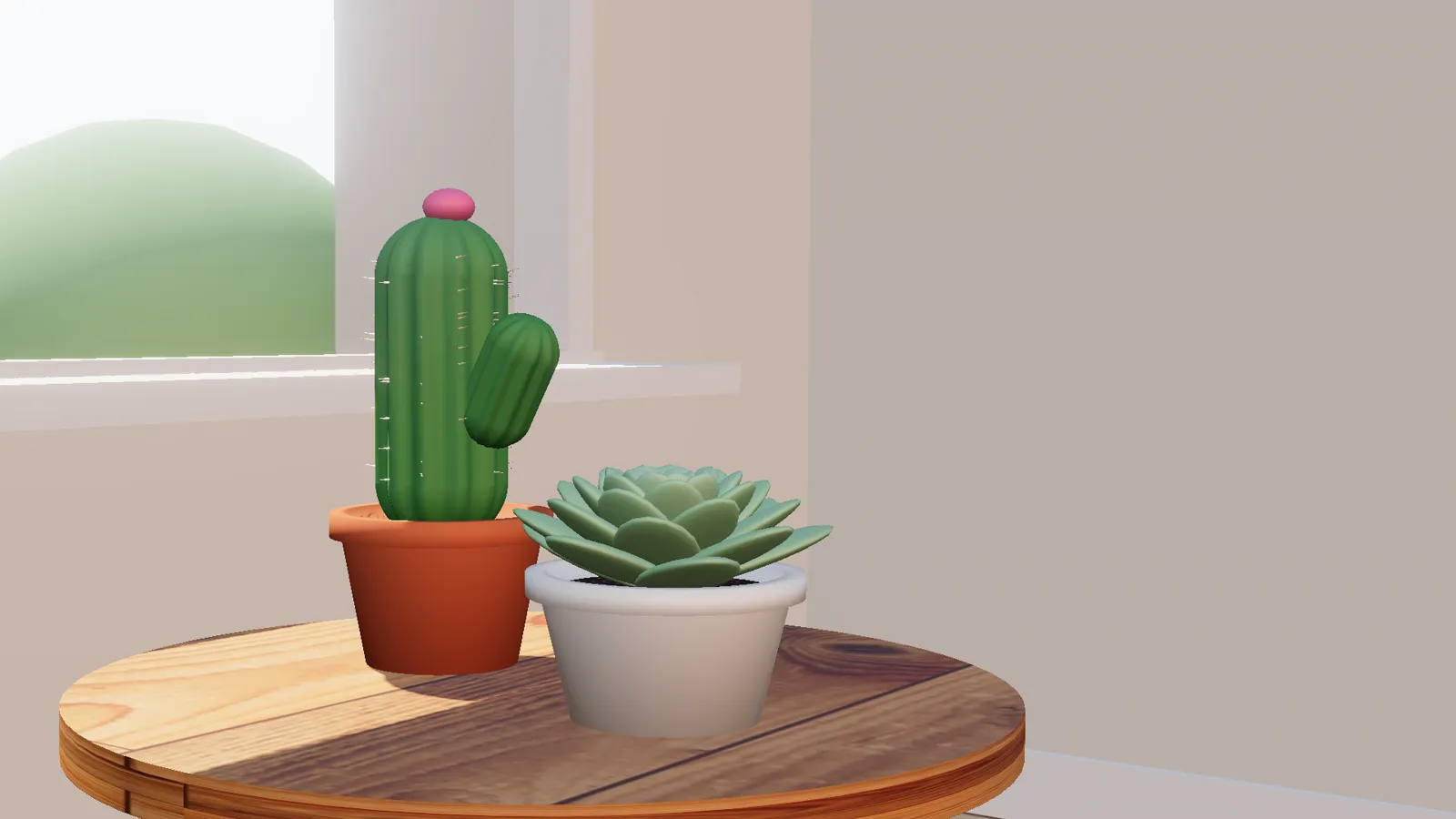
Watch the new growth. If it comes in pale, thin and slow, or leaves start dropping, the plant wants more light; bleached or scorched leaves say it is getting too much.[1] Not sure about a spot? The Light Checker works it out from four questions, and Where to put houseplants goes into detail.
How often should you water a houseplant?
Water when the soil is dry, not on a fixed day. Push a finger into the potting mix first; if it feels damp, wait.
Overwatering is one of the most common causes of houseplant problems.[4][3] Excess water cuts off oxygen to the roots, damages them, and leaves the plant unable to take up water, so it wilts even though the soil is wet.[5]
- Check. Push a finger into the mix. Most plants need water when it is dry at your fingertip; plants that like to dry out can wait until it is dry 2 inches (5 cm) down.[6][7]
- Water thoroughly. Pour slowly until water runs out of the drainage holes.[6]
- Empty the saucer. Never leave the pot standing in water.[6][7]
Warm, sunny spots and clay pots dry faster, and plants need less water when they rest.[6] That is why the same plant needs water at different times in summer and winter. The Watering Helper suggests how often to check the soil for your plant, pot and season.
What soil and pot does a houseplant need?
Use sterile potting mix, not garden soil, in a pot with a drainage hole. Repot into a slightly larger pot when roots fill it.
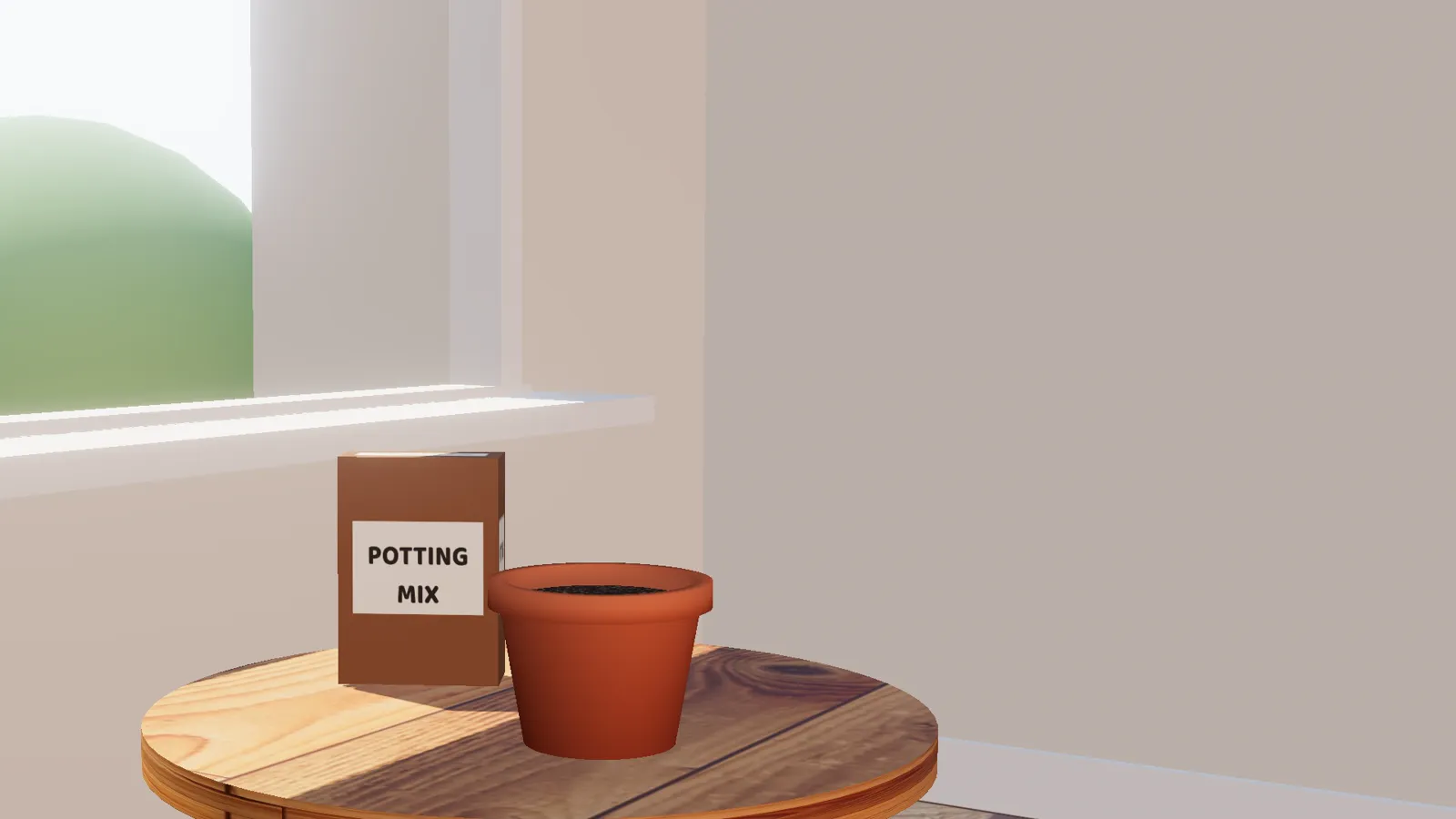
Garden soil and dirty pots can carry root rot, so use a sterile potting mix and clean or new pots.[8]
Every pot needs a drainage hole. Without one, the soil stays wet and the roots can rot and die.[1][9] If you love a decorative pot with no hole, keep the plant in a nursery pot with holes inside it, and tip out any water that collects.[9][10]
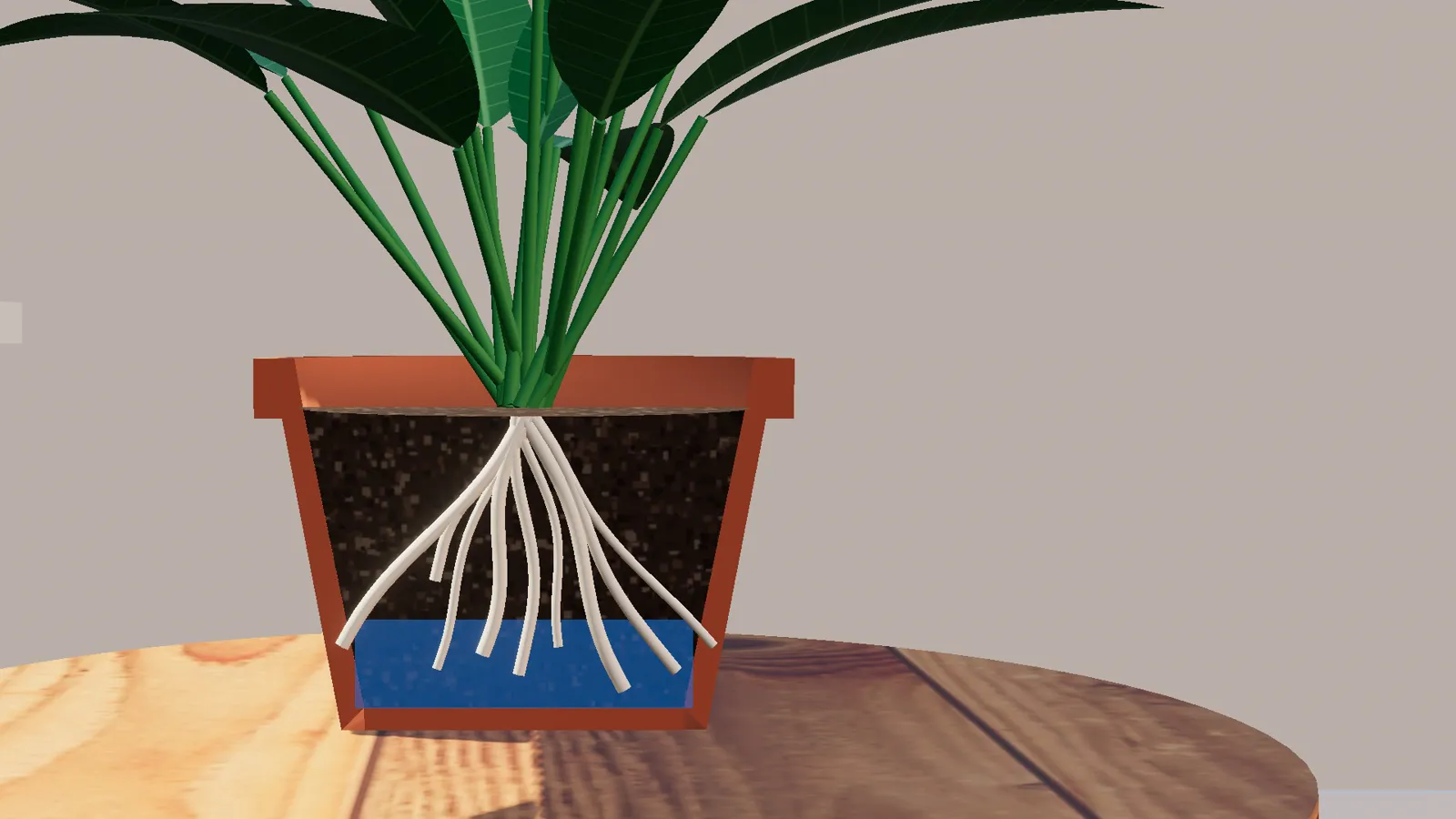
A plant needs a bigger pot when roots circle the inside of the pot or grow out of the holes, and water runs straight through.[11] Choose a new pot only slightly larger than the old one.[9]
What temperature and humidity do houseplants like?
Most foliage houseplants grow best between 70 and 80 °F by day and a little cooler at night, away from drafts, heaters and air conditioning.
Foliage plants grow best at 70 to 80 °F (21 to 27 °C) during the day and 60 to 68 °F (16 to 20 °C) at night. Keep them away from heat or air conditioning vents and drafts, which cause sudden temperature swings.[12]
Indoor air is often too dry for houseplants, especially in winter. Dry air shows as crispy leaves with brown tips and edges.[12][3] Cacti and succulents do not need extra humidity.[12]
When and how should you feed houseplants?
Feed only while the plant is actively growing, in spring and summer, at the label rate. Skip feeding while it rests in winter.
Plants grown in the same pot for years use up the nutrients in the potting mix, which shows as yellowing leaves and lackluster growth. The answer is a liquid feed while the plant is growing, or fresh potting mix.[3]
Fertilize only when houseplants are actively growing.[1] Fresh potting mix usually contains a little fertilizer, so a newly repotted plant needs little or none for the first few months.[1] Use the label rate every two or three months, or a much weaker solution at each watering during the growing season. If a plant rests over winter, do not feed it.[15] More is not better: too much fertilizer browns leaf tips and edges and leaves a white crust on the soil or pot rim.[16][15]
Which habits keep houseplants healthy?
Three habits prevent most problems: check the soil before every watering, look your plants over each week, and keep the leaves free of dust.
- Check the soil before you water. It is the simplest way to avoid overwatering.[6][3]
- Look plants over each week. Check new plants weekly for pests; if nothing turns up after several weeks, monthly is enough. If you find pests, move that plant away from the others right away.[4]
- Keep the leaves clean. Wipe smooth leaves with a damp, soft cloth. Clean leaves take in more light.[15][3]
If something still goes wrong, 8 signs your houseplant needs help explains what each sign means, and the Plant Problem Finder narrows it down.
Which houseplants are best for beginners?
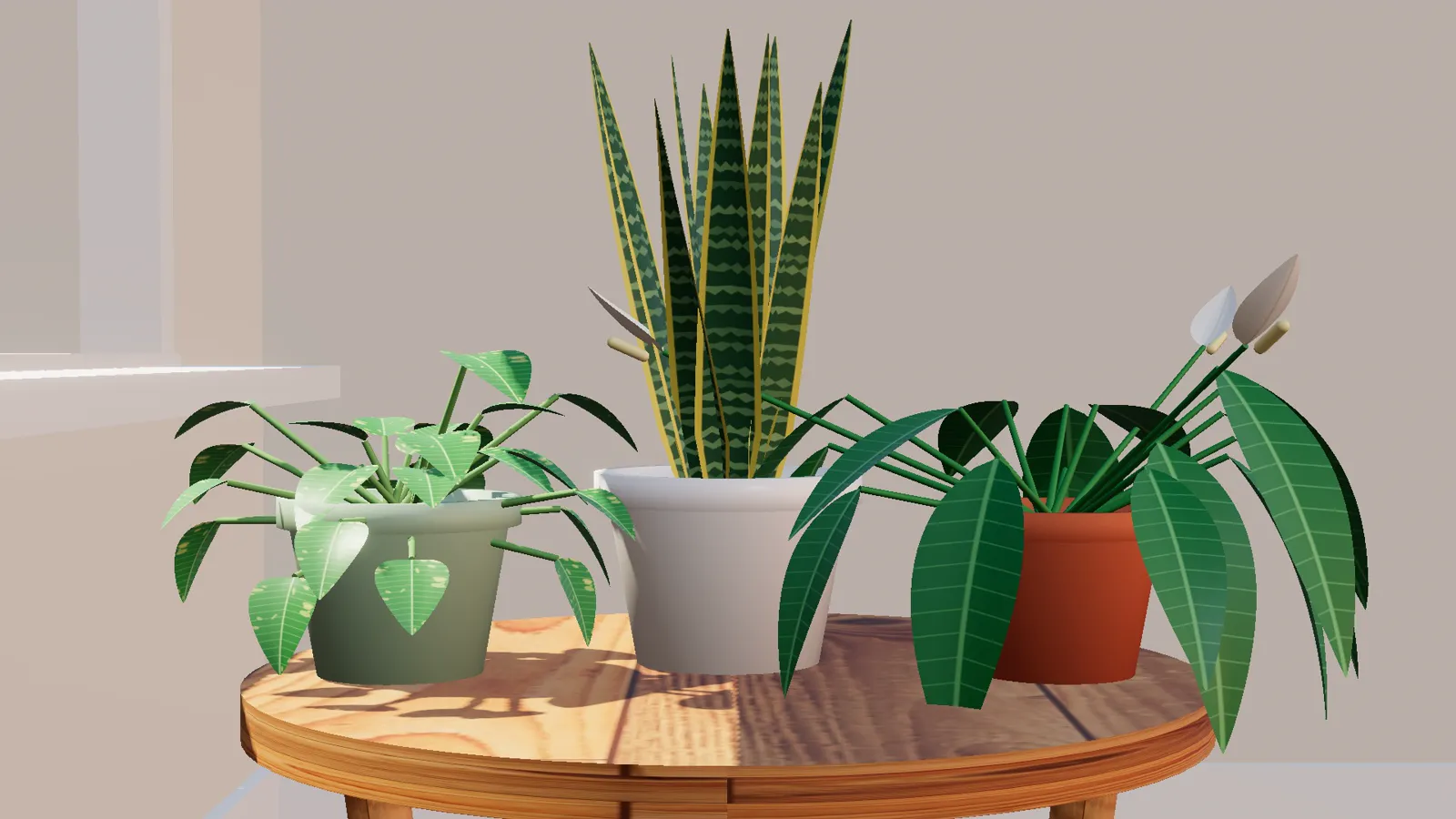
Pothos, snake plant, ZZ plant, spider plant, heartleaf philodendron and peace lily are forgiving choices. Only spider plant is listed as non-toxic to pets.
Iowa State Extension lists all six as easy, low-maintenance houseplants.[17] Here is what each needs, from our plant list.
| Plant | Light | Watering | Cats and dogs |
|---|---|---|---|
| PothosEpipremnum aureum | Bright indirect light, Medium light, Low light[18][17] | Likes to dry out[18] | Toxic[19][20] |
| Snake plantDracaena trifasciata (Sansevieria trifasciata) | Bright direct light, Bright indirect light, Medium light, Low light[17][15] | Likes to dry out[17] | Toxic[19][20] |
| ZZ plantZamioculcas zamiifolia | Bright indirect light, Medium light, Low light[21][17] | Likes to dry out[21] | Toxic[22] |
| Spider plantChlorophytum comosum | Bright indirect light, Medium light[23][17] | Likes to dry slightly between waterings[23] | Non-toxic[19][20] |
| Heartleaf philodendronPhilodendron hederaceum | Bright indirect light, Medium light, Low light[24][17] | Likes to stay lightly moist[24][17] | Toxic[19][20] |
| Peace lilySpathiphyllum species | Bright indirect light, Medium light, Low light[25][17] | Likes to stay lightly moist[25] | Toxic[19][20] |
If a pet or child might chew a plant, check its safety first, and if one does, call your vet or doctor right away.
Print the one-page houseplant care cheat sheet
Common questions
How often should I water a new houseplant?
There is no set number of days. Check the soil with your finger and water when it is dry about one knuckle down, or 2 inches down for plants that like to dry out. Warm, bright rooms and clay pots dry faster.
Should I mist my houseplants?
Misting is not an effective way to raise humidity. The extra moisture lasts only until the water evaporates, often a matter of minutes. A humidifier works better, and grouping plants may help a little.
Can I use garden soil for houseplants?
No. Use a sterile potting mix made for containers. Garden soil can carry the organisms that cause root rot, so extension services advise against it.
When should I feed my houseplants?
Feed during the growing season in spring and summer, at the rate on the fertilizer label. If a plant rests over winter, do not feed it until it starts growing again.
What is the easiest houseplant for a beginner?
Pothos, snake plant, ZZ plant, spider plant, heartleaf philodendron and peace lily are all listed by Iowa State Extension as easy, low-maintenance houseplants. If you have pets, spider plant is the one of these that the ASPCA lists as non-toxic.
Sources
Each numbered link in the text points to one of these pages, each opened and read on the date shown. How we check facts.
- How to Care for HouseplantsIowa State University Extension and Outreach. Checked .
- Lighting for Indoor PlantsUniversity of Maryland Extension. Checked .
- How to help a poorly houseplantRoyal Horticultural Society. Checked .
- Pest Notes: Houseplant Problems (Publication 74172)University of California Statewide IPM Program. Checked .
- Overwatered Indoor PlantsUniversity of Maryland Extension. Checked .
- Indoor Plants: WateringClemson Cooperative Extension, Home & Garden Information Center. Checked .
- Watering Indoor PlantsUniversity of Maryland Extension. Checked .
- Root Rots on Indoor PlantsUniversity of Maryland Extension. Checked .
- Repotting HouseplantsPenn State Extension. Checked .
- Potting and Repotting Indoor PlantsUniversity of Maryland Extension. Checked .
- Pot-Bound Indoor PlantsUniversity of Maryland Extension. Checked .
- Temperature and Humidity for Indoor PlantsUniversity of Maryland Extension. Checked .
- The air in our home is extremely dry in winter. Should I mist the houseplants?Iowa State University Extension and Outreach. Checked .
- Humidity and HouseplantsPenn State Extension. Checked .
- Indoor Plants: Cleaning, Fertilizing, Containers and Light RequirementsClemson Cooperative Extension, Home & Garden Information Center. Checked .
- Fertilizer Toxicity or High Soluble Salts in Indoor PlantsUniversity of Maryland Extension. Checked .
- Easy Low-Maintenance HouseplantsIowa State University Extension and Outreach. Checked .
- How to Grow Pothos Indoors (Epipremnum spp.): Care, Cultivars, and Common ProblemsClemson Cooperative Extension, Home & Garden Information Center. Checked .
- Toxic and Non-Toxic Plant List: CatsASPCA. Checked .
- Toxic and Non-Toxic Plant List: DogsASPCA. Checked .
- ZZ Plant (Zamioculcas zamiifolia): Indoor Care, Growing Tips & Plant GuideClemson Cooperative Extension, Home & Garden Information Center. Checked .
- These Houseplants Can Cause Trouble for Your PetsASPCA. Checked .
- Spider Plant (Chlorophytum comosum)Clemson Cooperative Extension, Home & Garden Information Center. Checked .
- PhilodendronClemson Cooperative Extension, Home & Garden Information Center. Checked .
- Peace LilyClemson Cooperative Extension, Home & Garden Information Center. Checked .