Where to put houseplants
How to read the light in your home, how far from a window each plant can go, and which plants fit each spot.
Quick answer
Put most houseplants close to a bright window where they get plenty of light but little hot sun on the leaves: right in front of an east or west window, or a few feet back from a south one. Light drops quickly as you move away from the glass.
How do I read the light in a spot?
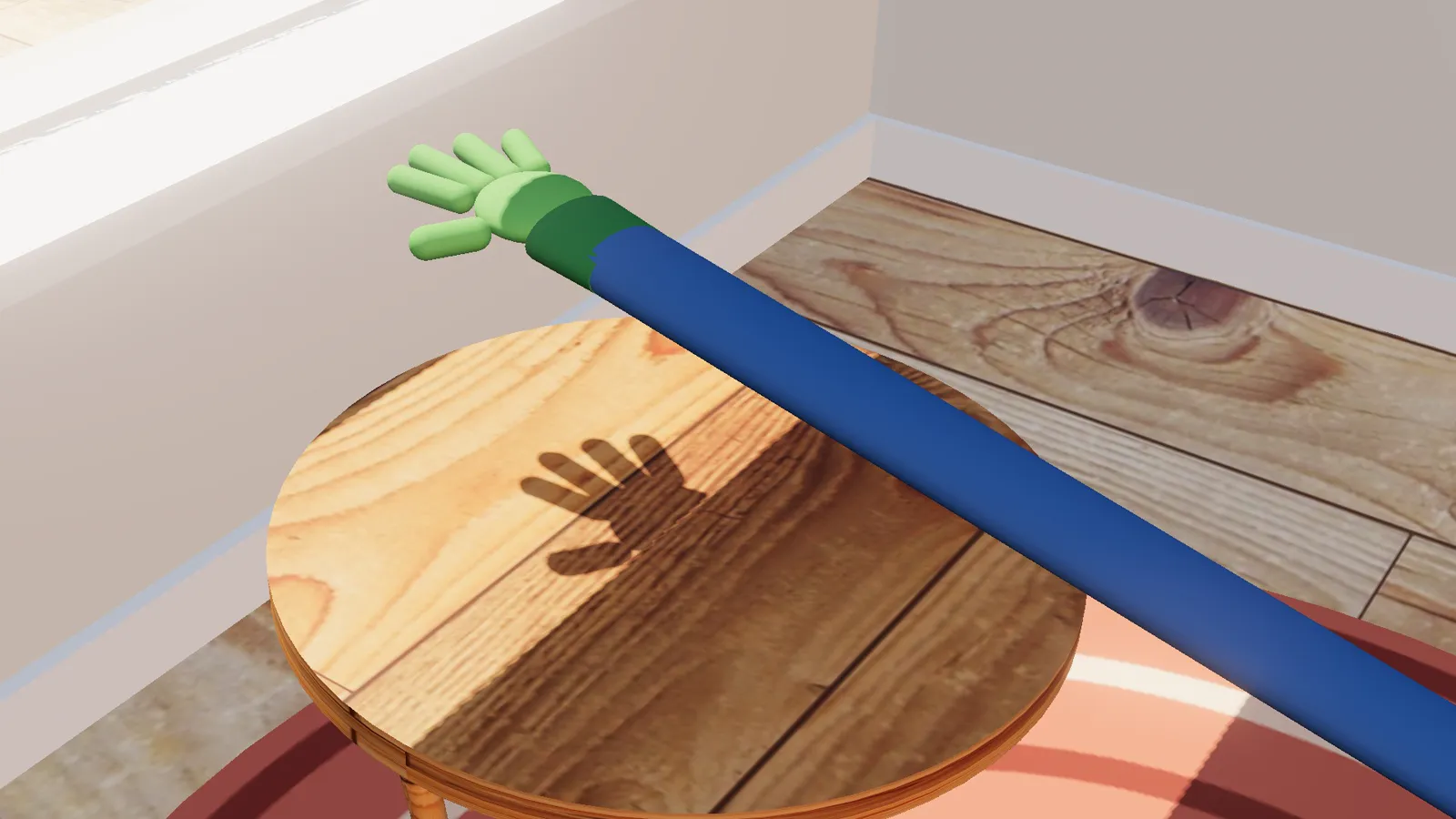
Do the shadow test at midday and note the window direction and distance. Sun on the spot means direct light; a clear shadow, bright indirect.
Bright, indirect light is light bright enough to cast a distinct shadow, without sun rays hitting the leaves.[1] So hold your hand over the spot at midday: if sun shines on the spot, it gets direct light; if your hand casts a clear shadow with no sun on the spot, it is bright indirect light. The fainter the shadow, the less light.
The shadow test does not grade the dimmer levels well, so also note which way the window faces and how far the spot is from it. The Light Checker combines all of that, and says so when your answers disagree.
How much light does each window give?
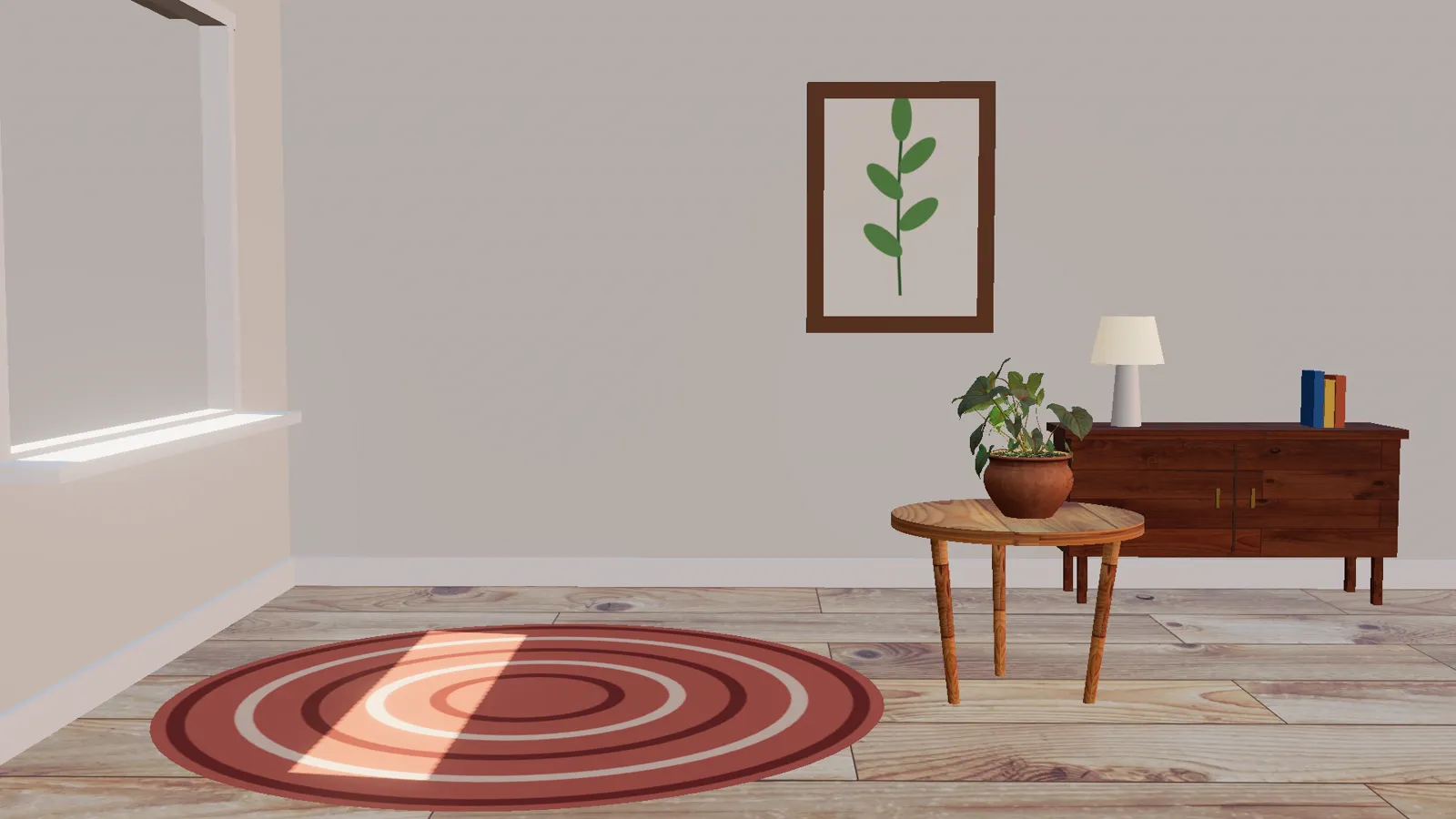
South windows give the most light and east and west windows plenty; north windows give the least. Light falls off fast as you step back.
Windows that face south, east and west let in more light than north windows.[2][1] West windows give plenty of light but it can be too intense for some plants.[1] Indoor light levels drop quickly as you move away from the glass.[1][3]
| Window faces | On the windowsill | About 3 feet (1 m) | About 6 feet (2 m) | 10 feet (3 m) or more |
|---|---|---|---|---|
| South | Bright direct light | Bright indirect light | Medium light | Low light |
| East | Bright indirect light | Medium light | Low light | Low light |
| West | Bright indirect light | Medium light | Low light | Low light |
| North | Medium light | Low light | Low light | Too dark for most plants |
Based on the University of Illinois Extension table of light by window and distance.[4] Where a distance falls between its ranges, we show the lower level. Curtains, tinted glass, trees and buildings outside all cut the light further.[1][3]
Which plants fit each light level?
Sun lovers like jade want direct light; most foliage plants want bright indirect light; only a few, like ZZ plant, cope with low light.
Cacti and succulents such as jade want several hours of direct sun.[3][5]
Monstera and fiddle leaf fig grow best in bright, indirect light; direct sun can scorch monstera leaves.[11][13]
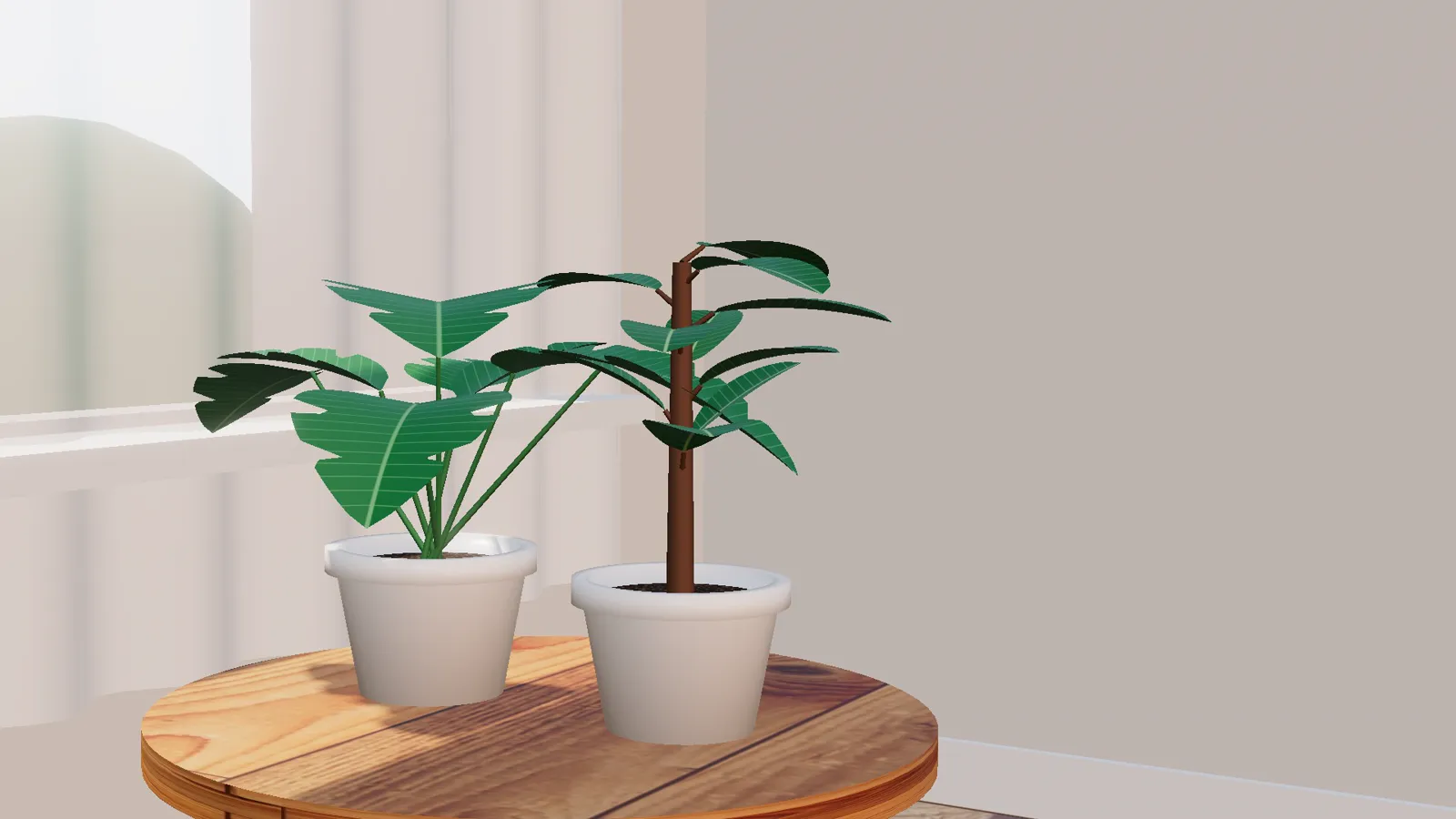
Pothos and heartleaf philodendron also grow in medium light, a few feet from a bright window or right at a north window.[8][12]
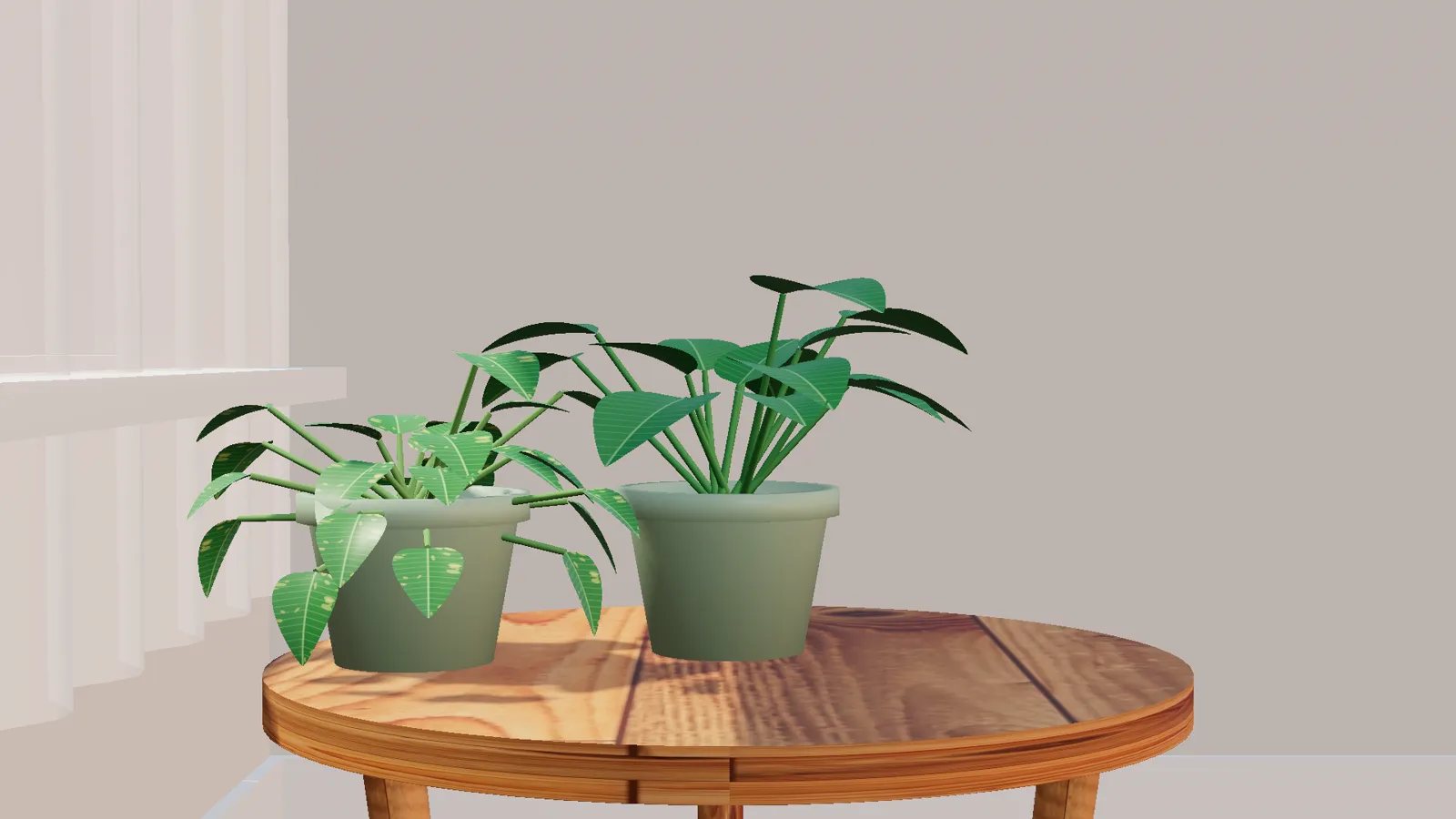
Snake plant grows in anything from low to direct light, so it suits a dim spot.[6]
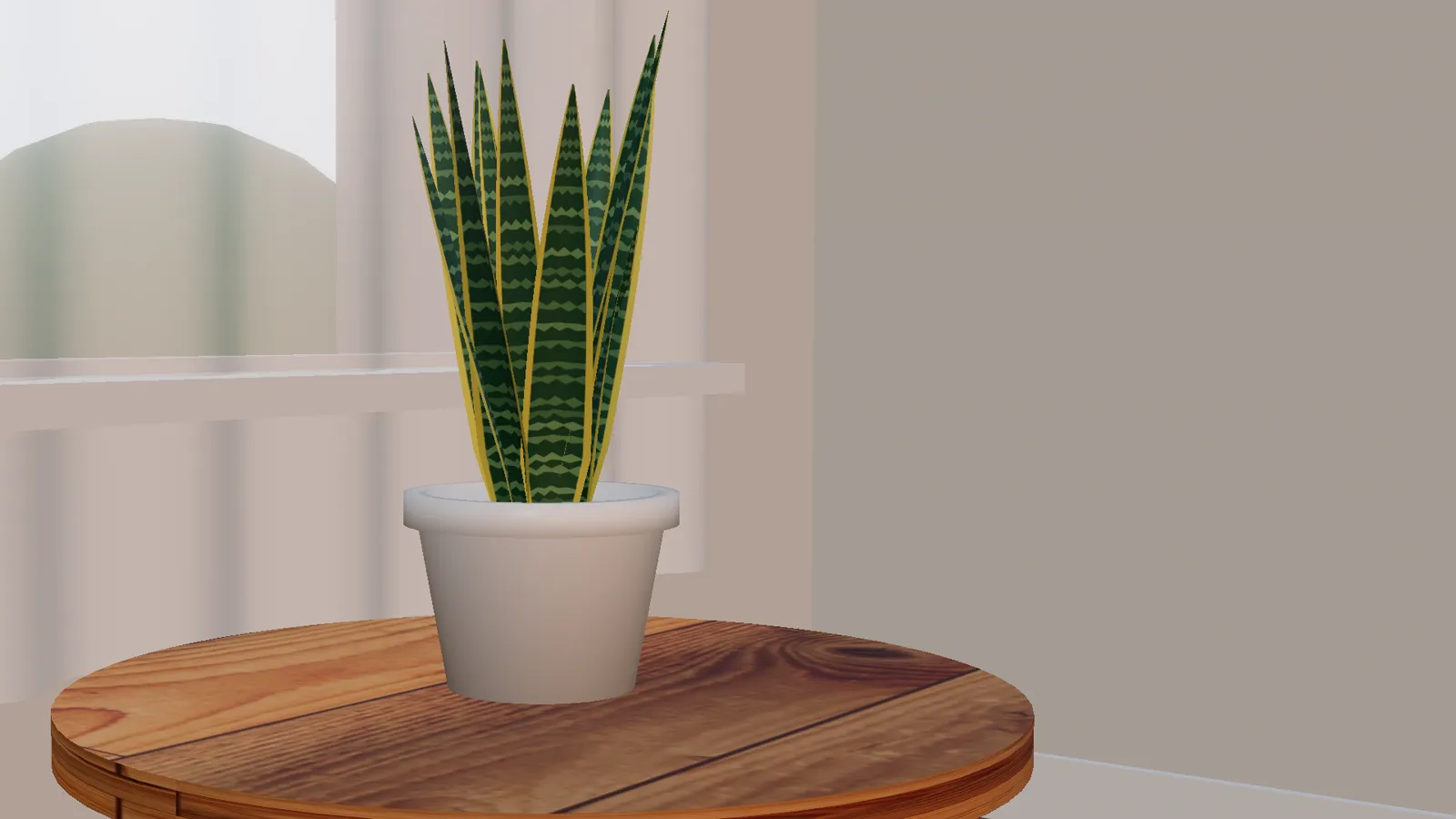
How do I know a plant is in the wrong light?
Too little light shows as pale, spindly, slow growth and dropping leaves. Too much shows as bleached, scorched or yellowing leaves.
If leaves drop, flowers fail to develop, or growth is pale, spindly or slow, the light may be too low. If leaves are bleached or damaged, or turn yellow or brown and drop, the light may be too strong.[1] Variegated plants can also turn plain green in low light.[23]
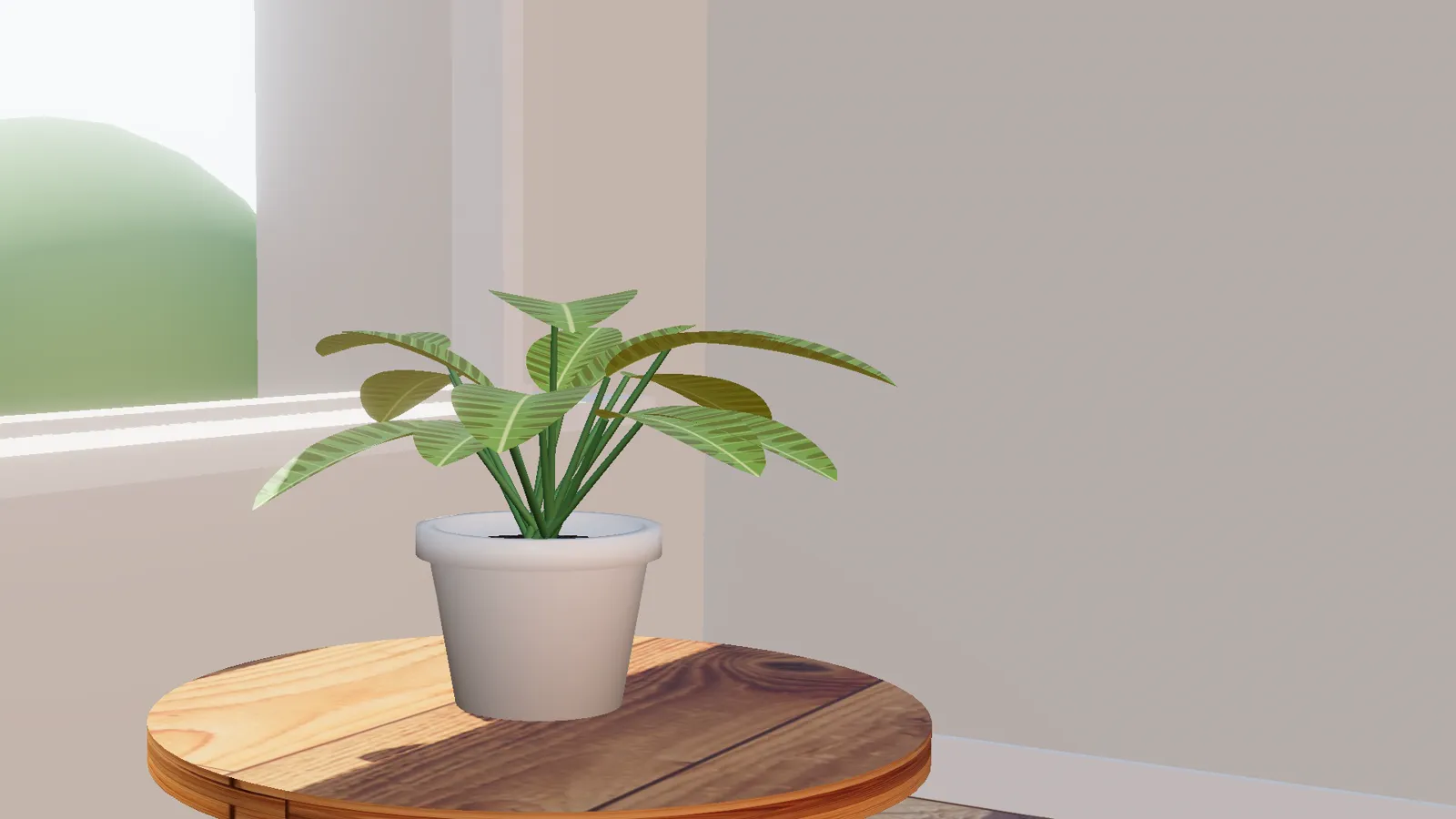
The Plant Problem Finder covers both: leggy, stretched growth and pale or bleached patches.
How do the seasons change the light?
Winter light is weaker, so move plants closer to the window; in summer, strong sun through a south or west window can scorch leaves.
Move plants closer to south or west windows in winter, when the light is lower.[23] Strong direct sun, such as through a south window in summer, can cause scorched patches.[23] The angle of the sun and the length of the day change through the year, so a plant may need moving to a brighter or shadier spot as the seasons turn.[7][2] Calathea shows how this works: in summer it suits a north or east window, in winter a south one.[14]
What if my home is too dark?
Use a grow light. Give plants no more than 16 hours of light a day, and choose plants that tolerate low light.
Move plants closer to a light source or add artificial light. Horticultural grow lights work well. Run them for 16 hours a day at most, since plants need a dark period.[24] Cleaning windows and removing screens can let in as much as 30% more light,[2] and pale, light-colored surfaces reflect more light onto plants.[3]
Not sure which level a spot is? Answer four questions in the Light Checker and get the level and the plants that fit.
Print the one-page houseplant care cheat sheet
Common questions
Is a north-facing window enough for houseplants?
Right in front of a north window there is medium light; a few feet back it drops to low light. That suits plants that tolerate lower light, such as ZZ plant, snake plant and Chinese evergreen, but not sun lovers.
How far from a window is bright indirect light?
Directly at an east or west window, or within roughly 5 feet (1.5 m) of a south-facing one. Step farther back and it soon falls to medium, then low light.
Can houseplants get too much sun?
Yes. Strong direct sun, such as through a south window in summer, can scorch leaves. Peace lilies, ferns and Chinese evergreens should be kept out of direct sun.
Do sheer curtains help?
Curtains and sheers cut the light a lot. Use one only where direct sun is scorching leaves, not for plants that are already short of light.
What if my home is too dark for plants?
Add a grow light and give plants no more than 16 hours of light a day, because they need some darkness. Clean windows and pale walls also help.
I live in the southern hemisphere. What changes?
Swap north and south. In the southern hemisphere, north-facing windows get the most sun and south-facing windows the least. The Light Checker has a switch for this.
Sources
Each numbered link in the text points to one of these pages, each opened and read on the date shown. How we check facts.
- How to Care for HouseplantsIowa State University Extension and Outreach. Checked .
- Extension Gardener Handbook, Chapter 18: Plants Grown in ContainersNC State Extension. Checked .
- Lighting for Indoor PlantsUniversity of Maryland Extension. Checked .
- Lighting (Houseplants)University of Illinois Extension. Checked .
- Jade Plant, Crassula ovataUniversity of Wisconsin-Madison Extension. Checked .
- Easy Low-Maintenance HouseplantsIowa State University Extension and Outreach. Checked .
- Indoor Plants: Cleaning, Fertilizing, Containers and Light RequirementsClemson Cooperative Extension, Home & Garden Information Center. Checked .
- How to Grow Pothos Indoors (Epipremnum spp.): Care, Cultivars, and Common ProblemsClemson Cooperative Extension, Home & Garden Information Center. Checked .
- ZZ Plant (Zamioculcas zamiifolia): Indoor Care, Growing Tips & Plant GuideClemson Cooperative Extension, Home & Garden Information Center. Checked .
- Peace LilyClemson Cooperative Extension, Home & Garden Information Center. Checked .
- How to grow Swiss cheese plantsRoyal Horticultural Society. Checked .
- PhilodendronClemson Cooperative Extension, Home & Garden Information Center. Checked .
- How to grow ornamental figsRoyal Horticultural Society. Checked .
- How to grow calatheasRoyal Horticultural Society. Checked .
- Spider Plant (Chlorophytum comosum)Clemson Cooperative Extension, Home & Garden Information Center. Checked .
- Rubber PlantClemson Cooperative Extension, Home & Garden Information Center. Checked .
- Care tips for light-loving houseplants (RHS Urban Show 2024)Royal Horticultural Society. Checked .
- EcheveriaRoyal Horticultural Society. Checked .
- Growing Succulents IndoorsIowa State University Extension and Outreach. Checked .
- Growing English Ivy IndoorsClemson Cooperative Extension, Home & Garden Information Center. Checked .
- Indoor FernsClemson Cooperative Extension, Home & Garden Information Center. Checked .
- Chinese Evergreen (Aglaonema) Care, Cultivation & Growing GuideClemson Cooperative Extension, Home & Garden Information Center. Checked .
- How to help a poorly houseplantRoyal Horticultural Society. Checked .
- Low Light Impacts on Indoor PlantsUniversity of Maryland Extension. Checked .